“Nothing is simple” about massive US healthcare shifts
From new vaccine guidance to nutrition policy to AI, the health care industry is already navigating massive change in 2026. New York Times health care reporter Sarah Kliff joins Rapid Response to break down major shifts reshaping American health — including new vaccine recommendations, an updated food pyramid, the continued rise of GLP-1 drugs, and OpenAI’s Health GPT. Kliff explains why these changes matter far beyond hospitals and clinics, and why leaders across sectors should be paying close attention as health care, technology, and policy collide.
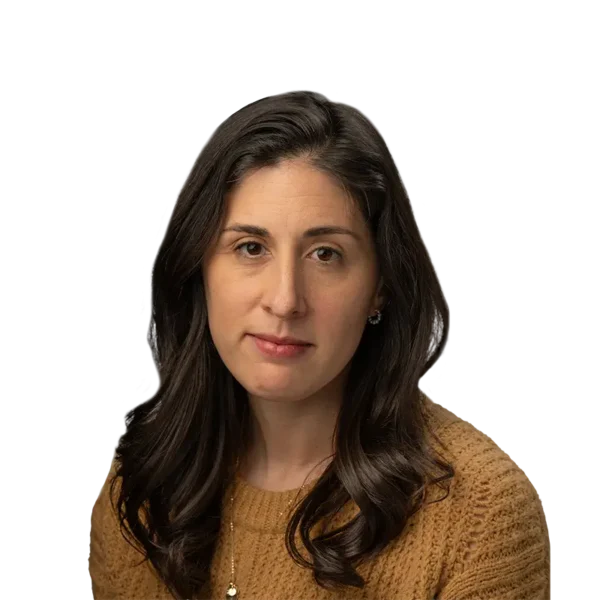
About Sarah
- Investigative health care reporter at The New York Times
- Reporting inspired federal legislation, including the 2020 No Surprises Act
- Coverage led hospitals to cancel medical debt and reform billing practices
- Recipient of awards and fellowships from AHCJ and USC Annenberg School
- Nearly a decade covering major US health policy developments, including ACA
Table of Contents:
- Understanding changes in vaccine recommendations
- Redefining diet advice and the controversy around food and alcohol guidance
- GLP-1 drugs as a transformative force in healthcare
- Major shifts in healthcare coverage and their ripple effects
- New approaches to prescription drug pricing
- The promise and pitfalls of AI in healthcare
- State-level innovations and hot-button issues in healthcare policy
Transcript:
“Nothing is simple” about massive US healthcare shifts
SARAH KLIFF: There are some things that experts across the spectrum do like in the new recommendations, that inverted pyramid, you see the fruits and vegetables up there. But then, there’s also more controversy around things that are being promoted. For example, changing recommendations around alcohol consumption. Dr. Oz praised alcohol as a social lubricant, and should we really be rolling those back? It seems similar to the vaccine changes, a very big change, very quickly, that goes away from these recommendations that were developed over years and years under the guidance of large expert bodies.
BOB SAFIAN:
That’s Sarah Kliff, healthcare journalist for the New York Times. I wanted to talk to Sarah about the flurry of health news that’s come out in 2026. From new US vaccine recommendations and food guidelines, to GLP-1 developments and OpenAI’s launch of HealthGPT. As Sarah explains, these are shifts that affect each of us personally and nearly all businesses, whether you’re directly in healthcare or in adjacent areas. Let’s get to it. I’m Bob Safian and this is Rapid Response.
[THEME MUSIC]
I’m Bob Safian. I’m here with Sarah Kliff, award-winning healthcare reporter at the New York Times. Sarah, thanks for being here.
KLIFF: Yeah, thank you for having me.
SAFIAN: This new year has already brought a wave of new healthcare developments. I’m eager to get your insights and perspectives about it. Let’s start with RFK Jr., US Secretary of Health and Human Services and the drop in recommended childhood vaccines from 17 to 11. You have some medical experts fuming. You have MAHA world pointing to examples of other places like Denmark that have even fewer vaccines. What’s going on with this?
Copy LinkUnderstanding changes in vaccine recommendations
KLIFF: Yeah, it was a big welcome back to the new year with a giant, giant news story. I think it’s going to be a lot of confusion for parents, for providers. You now essentially have these competing vaccine schedules and there’s going to be a lot of confusion about which ones to follow and a lot of concern from public health experts about eliminating this set of six vaccines from the official schedule. I should say they’re not fully eliminated. There is a recommendation for certain groups, high-risk groups, otherwise talk to your doctor. It is ultimately the states who are setting vaccine policy through mandates for what vaccines you need to enter schools. It’s just a lot of chaos and confusion, which I think we keep getting more and more used to every day in our healthcare system.
SAFIAN: This analogy to Denmark, Denmark does only 10 in their recommendations, right?
KLIFF: Yeah. Each country develops their vaccine schedule to fit that country’s needs. Denmark is a pretty different place from the United States. With the universal healthcare system, that is not the American healthcare system. Vaccines play a bit of a different role here because we have much less access to healthcare than Denmark. Prevention is often our best step in making sure, since we are less good at getting people the treatment they need for some serious diseases, starting at the beginning with vaccines can often be a really powerful tool. It’s hard to transplant one set of recommendations from a small country into ours with, again, a very, very different healthcare system.
SAFIAN: This vaccine debate, I guess, that has emerged, is it about control over your own body versus collective good, individual health versus community health? I have trouble understanding where all this comes from and why it’s so whipped up right now.
KLIFF: Probably a lot of it grows out of very negative experiences that people have with our healthcare system. There’s a lot of things our system gets right, but also I think a lot of people walk away from it feeling like it’s incredibly expensive, which is a lot of the work that I do focuses on that. They feel that their concerns weren’t met. They’re getting rushed through these appointments. They’re not getting good explanations. I think a lot of that sets the groundwork for this movement that really begins to question everything that’s happening in the doctor’s office and whether it’s working for them.
SAFIAN: Let’s move to another change from RFK Jr., the updated diet recommendations. This hostility to ultra processed foods and then an embrace of red meat and saturated fats. I was talking with my wife about this and she was absolutely flummoxed. She’s like, “What is going on? Aren’t red meat and saturated fats drivers of cardiovascular disease?” What are we doing here?
Copy LinkRedefining diet advice and the controversy around food and alcohol guidance
KLIFF: We’re flipping the pyramid is what it seems like we are doing. There are some things that experts across the spectrum do like in the new recommendations, like a focus on whole foods. You see in that inverted pyramid, you see the fruits and vegetables up there. I think that’s something that across the board does draw some cord. But then there’s also, like you said, more controversy around some of these specific things that are being promoted. For example, changing recommendations around alcohol consumption. I think Dr. Oz praised alcohol as a social lubricant, and should we really be rolling those back? A kind of odd focus on beef tallow as a fat when there just, again, does not seem to be a ton of nutritional value there.
It seems similar to the vaccine changes, the very big change, very quickly, that goes away from these recommendations that were developed over years and years under the guidance of large expert bodies.
SAFIAN: Alcohol consumption was changed from no more than one to two drinks a day to something much more ambiguous, like limit consumption. Is there science behind that? I know there are different studies that come out at different times that say, “Oh, having a glass of wine is good for you.” Then, it says, “Having a glass of wine is not good for you.”
KLIFF: Yeah. I think it’s coming from this movement of you can make some better decisions for yourself than the government can, and we’re going to give you the reins to this. If you’re thinking about getting the flu vaccine, we’re not going to recommend it for everyone. You should have that conversation with your doctor. You should be making more of these decisions. I think it all feels like we’re going to put this more in the hands of patients and I understand why that ethos can feel empowering, but it also does have the risks. With things like alcohol, things like vaccines, there are knock-on effects to everyone else. These decisions that an individual makes are not just decisions that affect them. They’re decisions that affect all of us.
I think you can squeeze that clearly with vaccines, with the measles outbreaks we’re seeing become more and more common in the United States. We don’t live in a bubble. Our decisions affect others.
SAFIAN: This government guidance, diet, alcohol, even vaccines, do people actually listen? Do people have to legally follow the guidelines?
KLIFF: Obviously, there’s no binding law that you have to stick to the government mandated number of drinks. I will admit to going above those from time to time, but they matter. They filter out to public health agencies. The vaccines that are recommended often become the basis for the vaccines that states require for kids to enter school. I don’t think many of us are perfect about following the food pyramid, but we hear it and it sets some standard for what we consider healthy. You’re right, they’re not hard and fast. Everyone has to be cooking with beef tallow now, but they do percolate out there and set the groundwork for how we approach health decisions.
SAFIAN: A conspiracy theorist, and there are many these days, might look at some of these changes and say, “Oh, this change in the recommendations, I see the influence of the meat industry, the dairy industry, the alcohol industry.”
KLIFF: I think with any decision, you always wonder about the influence of industry on them. There have been some reports of folks with financial ties to the beef industry being involved in some of the bodies that help set these new nutrition recommendations. But I think you also just look at RFK as a guy who believes in a lot of this. It does not seem like he needed a lot of pushing from the industry to come to these conclusions. I think it feels like more than a conspiracy. It’s a little more out in the open.
SAFIAN: President Trump has said publicly that he doesn’t find healthcare particularly interesting. Does that mean that RFK has more freedom than health secretaries in the past, has more license?
KLIFF: I think so. I think it’s because RFK brought with him a whole movement and a movement that really believes in the things that he is doing over at HHS. I think he has been given, quite right, discretion. HHS, it used to be pretty easy for our newsroom to cover. These things were on autopilot. You had the guideline updates, they were not big top of our website news for us. Now, it’s hugely different than the role of the previous HHS secretaries I’ve covered. Things are getting changed constantly. I think that does speak to the freedom that Trump has given RFK to really roll with the things that he wants to do.
SAFIAN: All right. Let’s go to GLP-1s. One in eight Americans have already tried them. Now there’s new pill forms that are coming out, which seem poised to swell those numbers even more. Is that good, that this is like a miracle treatment, science-based, safe, effective?
Copy LinkGLP-1 drugs as a transformative force in healthcare
KLIFF: We think so. It seems almost, in a way, too good to be true, but we’re seeing a lot of really positive impacts of these drugs on obesity and other conditions. It’s pretty remarkable. At this point, it’s becoming a financial test and you see the Trump Administration trying to respond to that by making some of these deals with makers of Ozempic, other drug makers, to lower the price of these drugs. If one in eight, even higher numbers are going to be on these, how are we going to pay for it? But the health outcomes seemed pretty clearly, so far, quite positive for folks who are taking them.
SAFIAN: The indications are like, this isn’t just something you take for a stint because you’ll regain weight and everything.
KLIFF: Right, and that feels like something we’re going to have to grapple with as we go forward, that these are not something you take for a little bit. What does that look like? What does it look like decades of use of these drugs? Those types of studies are ongoing, but I think it really is going to be a driving force, both of healthcare outcomes, and healthcare spending that is going to be shaping our healthcare system over the decades to come.
SAFIAN: Or, I’m not going to have GLP-1s in my water like fluoride because everybody needs it. No, because then all the restaurants would be upset because I’d stop eating everything. GLP-1s, can we tell yet whether it’s, oh, it’s a net savings because there’s less treatment, or is it net cost because we have to be paying for these things?
KLIFF: I think for the next few years at least it’s definitely net cost. These drugs are expensive. The type of conditions that you’re going to prevent, diabetes, heart disease, those dividends are going to pay years and years and years in the future. A lot of those savings might accrue to Medicare when people are older after 65 while the drugs are paid for by the private insurance system or Medicaid. It gets a little difficult trying to work out the math, but I’d say when I think five, 10 years, that these are definitely a really significant cost to the healthcare system. They’re not going to be a saver quite yet.
SAFIAN: These changes in the last few weeks, and I know this is an impossible question, but I wonder, are we moving in the right direction? Are these good changes?
KLIFF: Oh, gosh, I don’t know. It feels like there are so many changes because we haven’t even got into all the coverage changes that are going to really reshape our insurance markets over the next few years or so. Yeah, the GLP-1s have been a very positive development. With the guidelines, that feels a little more mixed bag. I think if you were to ask, are we moving in the right direction with vaccines? A lot of public health experts would come back and say, “No, the new vaccine schedule is not moving us in the right direction.”
SAFIAN: You mentioned the coverage changes. The government shutdown last fall was in part about healthcare costs and coverage changes. What’s the impact been so far? What do you think is, where are we heading?
Copy LinkMajor shifts in healthcare coverage and their ripple effects
KLIFF: Yeah, so we have big changes to two of the major healthcare programs that cover people. One is Obamacare, the Affordable Care Act, where that shutdown that you mentioned, Bob, was over whether to extend these higher subsidies for the 20 million or so people who buy coverage on that marketplace. That’s what Democrats were trying to demand, but ultimately, we’re not able to get that demand. We just got new Obamacare numbers yesterday that showed that signups are 1.4 million lower than they were last year. That’s 1.4 million people who probably took a look at the prices without these extra funds and said, “No, thanks. I’m going to go uninsured.” That’s one of the big changes happening right now.
Then, there’s Medicaid, which was cut by about 900 billion in the big Republican bill that passed last year. Those changes are on the horizon for next year, and those are probably going to amount to even more significant coverage loss. We’re seeing this really unprecedented in the 15 years that I’ve covered our health care system, this really unprecedented rollback of the federal health insurance programs that is going to have all sorts of knock-on effects. Democrats will absolutely want this to be a campaign issue in the midterms. I think that’s especially true for the Obamacare subsidies that did not get extended and that you’ve seen Republicans flirting with extending.
They’re keeping these proposals that can’t quite pass but that do garner some Republican support, because we do know from some of the data we’ve looked at, a lot of these cuts to Obamacare actually hit Republican districts the hardest. With the Medicaid changes, they held off the biggest changes until January 2027, to get right past the midterms. Those will be on the horizon when voters go to the polls in November, but they will not be actually feeling it.
SAFIAN: You won’t be feeling it yet.
KLIFF: You won’t be feeling it quite yet, but I think you’ll absolutely hear Democrats talking about those.
SAFIAN: As Sarah notes, it is for sure a time of chaos and confusion. Nothing is more important than our health, but nothing is more easily taken for granted. The same might be said of the US healthcare system too. What’s on the horizon for prescription drug prices and where will OpenAI’s launch of HealthGPT lead us? We’ll talk about that more after the break. Stay with us.
[AD BREAK]
Before the break, Sarah Kliff of the New York Times outlined the new healthcare landscape in 2026. Now, we talk about what’s coming next from TrumpRx efforts to cut drug prices, to OpenAI’s Health GPT. Plus a rapid fire round of other news highlights. Let’s jump back in. Drug prices, I know that the government’s poised to launch Trumprx.com this year. How will it work?
Copy LinkNew approaches to prescription drug pricing
KLIFF: The idea of TrumpRx is to let people purchase drugs directly from these manufacturers. Either you’re uninsured, your insurance isn’t getting a great deal, maybe a really high deductible. The Trump Administration has negotiated specific prices that people will pay if they just buy directly through this website for a handful of commonly used drugs. They’ve done this for some infertility drugs that are used for IVF treatment that can be pretty expensive. I think the impact of that remains to be seen. I was looking at my colleague, Rebecca Robbins has reported there’s a drug that, a three-month course to cure hepatitis C, on TrumpRx the negotiated rate is going to be north of $2,000 a month. I’m curious to see what happens with it.
In terms of why the drug makers are going along with it, I think they want to avoid more regulation. Let’s get the negotiated rates for this specific set of drugs. A lot of them also importantly are about to have their patents expire. They were going to face generic competition in the relatively soon future anyways. I think the idea is, “Okay, let’s do the negotiated rates for these and avoid a more sweeping overhaul of how drug pricing works in the United States.” I’m curious to see who this helps. Does this matter that much? It seems different than what we’ve tried before. No one has wanted to take a giant whack at the apple of completely regulating drug prices, which is how all our peers abroad do it.
This feels like a smaller version of that. You had mentioned healthcare has not traditionally been a focus of President Trump’s, but drug pricing seems to be one that has stuck with him. I remember him talking about in the first campaign and specifically this idea that other countries are getting better deals than us, I think has really driven a lot of this. Like, I want the same deals as those countries. Essentially, the prices on TrumpRx are supposed to be mirroring the prices other wealthy countries are getting from these drug-makers.
SAFIAN: It’s so interesting to try to get my mind around this administration and Trump and which areas we’re supposed to have freedom and agency and license for ourselves as individuals and which areas that he and the government want to step in and strong arm people into doing things their way.
KLIFF: I know. It almost closes the circle between left and right because you see Bernie Sanders has talked about taking seniors to Canada to get the drug prices that Canada has. There are some weird alignments with traditionally liberal thinking on drug policy. I haven’t seen Democrats speaking out in favor of TrumpRx, but it does take a tiny step towards price regulation and the government stepping in in terms of setting the prices that we pay for healthcare.
SAFIAN: Other news this month, OpenAI launched GPT Health, this AI tool for users to consolidate their medical records. People have already been turning to AI models for medical information, even doctors sometimes are using them as a backstop. OpenAI specializing its health offering: Is this good? Is this bad? It’s just inevitable?
Copy LinkThe promise and pitfalls of AI in healthcare
KLIFF: I think inevitable. That feels like the right adjective to use here. But it’s been something I feel like so many tech companies have tried to do some version of this. There’s always been this idea that patients should have better access to their medical records. Instead, if your experience is anything like mine, you have eight different portals to log into with records scattered across them that are unintelligible to you. There have been various companies, Google stands out to me as one of them that have tried to say, “We’re going to make your records consumer accessible. We’re going to make it easy for you to understand,” that just have not been able to do it.
Information sharing in healthcare is terrible. I wrote a story that’s always stuck in my head about how the fax machine is like, it is the only industry where the fax machine is like a dominant way of sharing information. I think I wrote that in 2019, and I think it is still true today. It’s still an industry that is shockingly paper and CD based when you get scans. A lot of that, in my view, traces back to a lot of the financial incentives. If Hospital A holds onto your information, it makes it harder for you to be a patient at Hospital B. Their incentives are to keep it to the fax machines, not have that easy share of information.
In terms of is this good, is this bad? I don’t know yet. I think a lot of people are attracted to the idea of having AI be able to make their health records more accessible, more readable. You already have a lot of people turning to AI. Even my mom will turn to AI when she gets a diagnosis from a doctor. I think it’s interesting and it’s something I want to watch.
SAFIAN: My colleague Reid Hoffman is very committed that AI and tech offers this tremendous potential to improve healthcare and access to healthcare, particularly for folks who don’t have it. I’m always poking it, but aren’t there risks about misinformation, and how is that trade-off?
KLIFF: Yeah, right. No, and I think that’s a great trade-off to think about because you’re completely right. There are all these areas of the country where it’s difficult to find a doctor, even in a large metropolitan area like Washington, DC where I live, where it’s very hard to find a good primary care provider. You think of, is there a liberalization of health information with AI and being able to use those kinds of tools? But exactly, you worry about misinformation, the hallucinations AI can have. Then, you think of that in healthcare, a really sensitive area. I’m also interested in how it’s going to shape the medical system.
There are so many records and transcribing and you’re starting to see all these AI tools come into play. It’s starting to play a major role in insurance denials and then appeals of insurance denials.
SAFIAN: I’ve heard that physician’s offices and hospitals, some of them are using AI to game the system, or as they would put it, to optimize their billing practices. Using AI to identify billing codes that can be applied to doctor visits and increasing the volumes of claims. On the other side, you’ve got insurers using AI as a way to deny claims, right?
KLIFF: This is the war they’ve been in for decades. It’s just a new tool, a new weapon that each of them has in this fight over, I want to bill for this, I don’t want to pay for this. Now the arms race just keeps continuing. Maybe it doesn’t solve the administrative cost problem. Maybe it’s worse because now everyone has this new powerful tool on their side. Then, I’m certain there are all sorts of vendors who have dollar signs in their eyes saying they are going to make the latest and greatest AI tool and sell it to the insurers or the hospitals. Then, all those costs trickle down to us as healthcare consumers.
SAFIAN: We only have a few more minutes, so I’d love to try a rapid fire round, pose some topics and you give me a quick reaction, that’s okay?
KLIFF: Okay.
SAFIAN: We’ve talked largely about federal guidelines and policies. Are there local or state policy health trends that we should have on our radar?
Copy LinkState-level innovations and hot-button issues in healthcare policy
KLIFF: One that is on my radar that’s health adjacent, I would say, is this proposed tax on billionaires in California that is partially motivated to offset the big Medicaid cuts that are coming. I’m curious to see if other liberal states, they don’t have quite as many billionaires as California to chase after, but if they are looking at some taxes like that, as they’re facing down these really steep Medicaid cuts coming their way.
SAFIAN: You mentioned IVF in passing before. IVF as a tool to raise the US birth rate. Vice President Vance, other MAGA folks are pushing for employer insurance coverage for IVF. We’ve seen anti-IVF efforts from other Republicans. Is IVF about to have another moment?
KLIFF: To be determined. It definitely roared into the political scene after Alabama. Gosh, that feels like a decade ago, and I think it was two years ago, when they briefly outlawed IVF. Since then it has been, again, become a pet issue of President Trump’s. He’s quite supportive. He has claimed he’s going to increase coverage for IVF. So far, the actual action we’ve seen is the adding of the infertility drugs to TrumpRx. If there were to be some mandate that insurers cover IVF, that would require new legislation and we have not seen that gaining significant traction here in DC yet.
SAFIAN: C-section births, one in three births in the US are C-sections, you’ve written that this is often due to unreliable technology. Can you explain that?
KLIFF: Yeah. These are a set of stories I did last year that focus on electronic fetal monitoring, which if anyone’s had a baby, it’s those two bands they put on your stomach that create this wiggly line that shows your baby’s heart rate. The idea of fetal monitoring when it was developed in the 1970s was that it would give doctors this reliable tool to peer inside the body, figure out when the baby’s in distress. In actuality, study after study shows it is not a reliable indicator of fetal distress and doctors often overreact to the readings they see, jump to a C-section when nothing’s actually wrong. It is one of the key drivers of overuse of C-section in the United States.
Despite that it just remains ubiquitous in American obstetrics. More than 95% will use this technology that one leading obstetrician told us was the worst test in medicine. The alternative is the older technology, which is checking every now and then with the stethoscope. Because you’re checking less, you’re less likely to pick up these false positive signs of distress. The government, actually, a little bit after those stories ran, through ARPA-H, which is the technology investment arm, new moonshot technology ideas, launched a project to reinvent the fetal monitor. They are working on that effort. We’ll see what happens with it. But I think there is an acknowledgement that something needs to change in this space.
SAFIAN: Finally, given that our audience is business leaders, for employers that want to reduce their health cost burden, without just shifting it to their employees, is there anything they can do? Do you have any advice about how you navigate that?
KLIFF: A lot of this is out of their hands. A lot of times they’re handing over the reigns to an insurance broker, especially if you’re not a giant employer. Your leverage when you have these giant and growing insurers and hospitals is not especially high. But if you’re an employer who really wants to get in the weeds on this, one thing that has changed over the past five-ish years is a big increase in price transparency. There are rules that have passed through both the Biden and Trump Administrations requiring both hospitals and insurers to make their prices public. The files are big and cumbersome, but if you look through them, you can actually see how much your local hospitals are charging for every C-section, knee replacement, urine test, everything.
If you really do want to dig into your healthcare costs, and I have talked to some employers who have done this, you can see if Hospital A is charging five times as much as Hospital B for really basic procedures like an x-ray or a CT scan. That might be one way you could get a better handle on, is there a place where you’re spending outrageous amounts on some pretty basic care?
SAFIAN: Then, you could adjust the insurance or the coverage that you offer to limit those cost?
KLIFF: Right, it’s a multi-part slog, I would describe it as. One thing you could do is try and work on your insurance design to, if there is a high quality center that is offering X-rays at one fifth the price of another, you can try and use cost sharing, different financial incentives, networks to guide your employees to the one that’s going to save you a decent amount of money.
SAFIAN: Man, nothing is simple about this.
KLIFF: No.
SAFIAN: What do you feel like is at stake for America’s healthcare today?
KLIFF: We’re just at the verge of a really big cut to federal healthcare programs, and therefore just to cut to the healthcare system, nearly a trillion dollars in cuts over the next decade, and we have not done that ever. I don’t know. It’s unpredictable what this is going to look like. We know it’s going to look like people losing insurance. What does it look like for the hospitals? Are we going to see a wave of hospital closures? That ripples out to not just people who have Medicaid and Obamacare, it ripples out to everybody who uses that hospital if they shut down the service lines that are less profitable, like emergency care or obstetrics. A lot of these cuts take place in 2027.
That either means finding the money somewhere else or cutting the services that are received. That’s a really difficult trade-off that doesn’t seem to have a great end to it.
SAFIAN: Well, Sarah, with that cautionary –
KLIFF: But happy ending.
SAFIAN: – and bracing note, thanks so much for doing this. I really appreciate it.
KLIFF: Yeah, thank you for having me.
SAFIAN: I’m not sure Sarah wanted to end on such a bracing note, but when changes come so fast and unexpectedly, it does tend to breed caution. The US healthcare system is such a muddle. No one would design a system like this if starting from scratch, but of course, we don’t have the luxury of starting from scratch. As Sarah points out, the size of the US makes all choices and all changes more complicated. How do I turn this in a more optimistic direction? I’m impressed by the number of times Sarah was prepared to say that she didn’t know what would come next. That takes bravery and maturity.
The fact that the future is unwritten leaves the door open for us to iterate on our choices to land better outcomes in healthcare and elsewhere. To achieve progress, we have to be willing to break with tradition. I can applaud RFK Jr. for that spirit. At the same time, I remain hopeful that he and other leaders won’t be swayed by personal emotion or frustration into abandoning or ignoring scientific evidence. Personally, I’m not going to start relying on beef tallow or amping up my alcohol consumption. I’m going to keep getting my annual flu vaccine. Most of all, I’m going to continue to dedicate myself to learning more about what’s new, what’s to be trusted, and what best supports a healthy human community. I’m Bob Safian. Thanks for listening.