Hollywood’s biggest night is more than a spectacle — it’s a stress test for an industry in freefall. Janice Min, CEO of The Ankler, joins Rapid Response to break down her Oscars predictions and what the show’s upcoming move to YouTube signals about the future of mainstream media. Min also unpacks the Paramount-Warner Bros. deal that caught everyone off guard, what David Ellison’s arrival really means for Hollywood, and why a viral AI video of Brad Pitt and Tom Cruise has the entertainment world more rattled than any box office bomb.
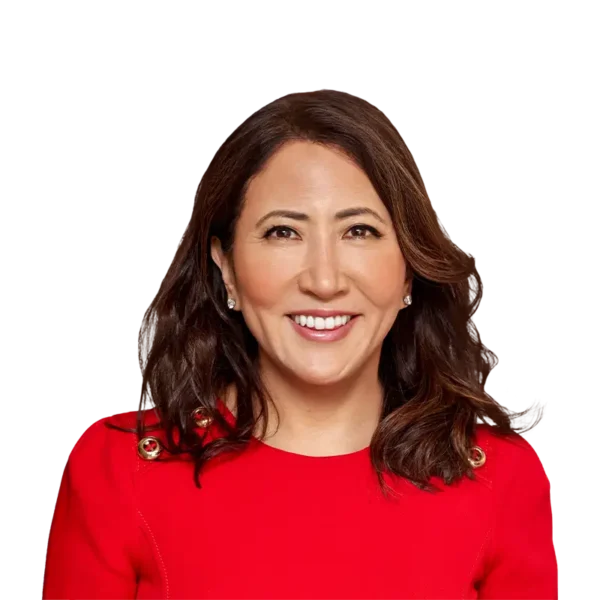
About Janice
- CEO & editor-in-chief of Ankler Media, a trusted entertainment industry voice
- Emmy winner
- Led Hollywood Reporter-Billboard Entertainment Group as longtime co-president
- Engineered The Hollywood Reporter's "stunning transformation" — NYT
- Transformed modern celebrity culture as editor-in-chief of Us Weekly
Table of Contents:
- How last minute controversies can swing Oscar voting
- Why prediction markets are shaping award season buzz
- How original studio films built momentum with voters
- Why Hollywood is growing more cautious about politics
- What the Paramount Warner Bros deal reveals about debt and ego
- Why the Oscars move to YouTube reflects a changing media landscape
- What the viral Tom Cruise and Brad Pitt AI video teaches Hollywood
- How microdramas and Disney parks point to the next entertainment economy
- Episode Takeaways
Transcript:
The Oscars 2026 mark a big shift for Hollywood
Bob Safian: Hi, everyone. Bob here. For today’s episode, with the Academy Awards right around the corner, I wanted to talk with my go-to Hollywood insider, Janice Min, CEO of The Ankler, about what we can expect from this year’s Oscars. Janice makes some bold predictions and offers some great insights. We also talk about Paramount’s triumph over Netflix in the bidding for Warner Bros. and whether it will actually be a triumph in the long run. Plus, the lessons of that viral AI video of Tom Cruise and Brad Pitt fighting on a roof, and more. Let’s get to it. I’m Bob Safian, and this is Rapid Response.
[THEME MUSIC]
I’m Bob Safian. I’m here with Janice Min, CEO of The Ankler. Janice, welcome back to the show.
Janice Min: Thanks for having me.
Safian: We are speaking in the lead-up to the Academy Awards, and of course, any predictions are fraught with potential embarrassment. So let’s get right to it.
Min: Wait, is this coming out before or after the Oscars?
Safian: It’s coming out before.
Min: OK, good.
Safian: Before.
Min: The internet’s my friend here. Everything will be forgotten. OK.
Safian: That’s right. We’ll look very smart. Maybe we won’t.
Min: Exactly.
Copy LinkHow last minute controversies can swing Oscar voting
Safian: So I want to ask you this two ways. Are there movies that you’re cheering for, and then other movies that you actually think will win? I know Sinners and One Battle After Another seem to be the front-runners, but nothing is for certain.
Min: Nothing is for certain. I think the funny twist of the past week, which came right as voting was ending, was this big Timothée Chalamet question, which is kind of hilarious. He does an interview and slags opera and ballet as irrelevant art forms. And suddenly, who knew there were so many people who would be up in arms over opera and ballet comments? In this crazy world of Oscar voting, it is the kind of thing, remember, lots of older people, lots of people who probably are patrons of the arts, who might not have loved that. And that’s the kind of thing that can, at the last minute, make someone say, “Oh, what a brat. Oh, he’s too young. He doesn’t deserve this. He doesn’t appreciate the arts.”
So that’s a funny twist in all this, peak Balletgate. It happened probably too late, but enough that sometimes these things, and remember, we will never know the numbers, the Pricewaterhouse numbers, but it can come down to a handful of votes. He ran a pretty impeccable campaign up until that point, but you want to run a clean campaign that gives no one a reason to vote against you, which is often as powerful as a vote for you.
Safian: I have to say, my go-to source for wisdom here has become Polymarket, the prediction betting site.
Min: Not you too.
Safian: Not really. No, not really. But I was looking, though, in the best actor category. He was at 80 percent, and now he’s below 50 percent.
Min: Oh, really?
Safian: Now, of course, how much of that is blowback about the opera and ballet, and how much of that is enthusiasm for Michael B. Jordan, who won the actor award?
Min: Well, OK. Why do I think that Polymarket’s not filled with ballet and opera aficionados? Probably not. But I have my own feelings about these prediction markets, both fascinated by them and highly skeptical of them as well. But they can reveal a sentiment. I think the people who are inclined to vote on this or put in a prediction on Polymarket are probably the same people who are following this obsessively.
And then also, Michael B. Jordan has been a big comer. He’s won a ton of awards in the last week. They call them the precursor awards, which represent different voting bodies. I don’t know. I’m going to call it. I’m making my first prediction: Michael B. Jordan for best actor.
Copy LinkWhy prediction markets are shaping award season buzz
Safian: Will you be wagering on the Oscars this year?
Min: I never know where to do my gambling, Bob. So I will probably just be observing.
Safian: I thought about, I guess, you could wager on how many people will watch, right?
Min: Well, yes. God, you can wager on that. You can also wager on who’s most likely to misread the winner, which presenter is most likely to be drunk, who they’ll forget in the in memoriam segment. But yeah, if it can be bet on, it will be bet on.
Safian: There’s an argument in sports that this drives more people to tune in.
Min: Completely.
Safian: Is that going to happen with the Oscars? Are we going to see huge ratings because of this?
Min: OK. I don’t know. Weirdly, I think the prediction markets might actually make a difference here. It did not make a difference in the Golden Globes. If you recall, they were Polymarketing that to death, and they had the Polymarket odds on the screen in the room, which, as the first awards show to do that, probably felt incredibly confusing to the audience. And I think the sentiment around the industry was that it was also very insulting. These are artists. You’re not voting on what they make, even though you kind of are when you vote with an award.
Safian: This isn’t a game. This is important stuff.
Min: This is not a game, people. So I think entertainment industry adoption within the industry is going to be slower than consumer adoption, obviously.
Copy LinkHow original studio films built momentum with voters
Safian: So Sinners, One Battle After Another. Are you in one camp or the other there? Is there a dark horse that you’re more into?
Min: So this is the good thing about both movies: They both were enormous box-office hits. Sinners is much bigger than One Battle After Another. But there are some years when you’re like, “What movie? Who are these movies?” These are big, proper studio hits. And I’ll tell you the thing that’s great about both of those movies. You have two studio chiefs at Warner Bros., Mike De Luca and Pam Abdy, and they went all in on something very counterintuitive in Hollywood right now, which is an original slate. Originals meaning IP that is not derivative of Fast & Furious or some other franchise.
And they have had hit after hit after hit, and these were two of them. Critical acclaim, box-office glory, it was an example of what Hollywood can do when they aren’t screwing up. And both films will be rewarded for that by the voters. I will say, again, I’m going to go back to Sinners. I think it has a lot of momentum in the market. People who might have originally dismissed it as, like, “Oh, vampire movie. Someone plays twins,” understand the underlying message of the Black American story, and the important, with a capital I, message they were trying to get out was thoroughly conveyed by the time voting ended.
And on the flip side of that, Leonardo DiCaprio, who does not do stunts and doesn’t really do a ton of press, you can see the two sides of a campaign. Both can work for you. I will tell you, any story you’ve read about any of these nominated actors, actresses, movies or directors in the last three months was done with heavy, heavy calculation. There was probably not one spontaneous word that you are consuming or seeing on television, in a radio interview or a podcast that was not premeditated.
Safian: With the exception of words about opera and ballet, right? With that notable exception, which I guess is why everything tries to be calculated.
Min: Thank God.
Safian: You leave it open. You never know what will happen.
Min: Thank God one of these performers slips up occasionally. It’s very refreshing.
Copy LinkWhy Hollywood is growing more cautious about politics
Safian: Conan O’Brien will be back as the host. Do you have any predictions about whether we should expect any political zingers, maybe about the White House using movie clips to promote the Iran war? Or is there pressure to steer clear of Trump and anything controversial?
Min: Bob, the chill is on here. Hollywood is in a tough place at the moment. You look at this merger happening with Paramount and Warner Bros., and thousands and thousands of jobs are at risk, fewer buyers. I think people really look at the climate here and say, “I would like to stick my neck out, but maybe this is not the time.” And I want to compare this to the Grammys not so long ago, where people were very politically vocal.
Bad Bunny, Billie Eilish, they were making statements that got a lot of press and infuriated President Trump. Musicians have a much more direct relationship with the audience. In Hollywood, you still are using gatekeepers to fund your projects, and no one wants to become toxic or a so-called “troublemaker” in this ecosystem, because that can derail a marketing plan. It can get people to boycott a project.
So I hate to say it, but these are fearful times in the industry. I think you might see some “ICE Out” buttons on people’s lapels. Hollywood loves a ribbon and a button. But overt political statements? We are not in the age of Marlon Brando.
Copy LinkWhat the Paramount Warner Bros deal reveals about debt and ego
Safian: You mentioned the big deal, the big news in Hollywood: Paramount Skydance winning the bid for Warner Bros. Discovery, Netflix dropping out, which I have to admit kind of surprised me, even though you made the case to me months ago that Paramount and David Ellison needed the deal more than Netflix did. Have you been surprised by what’s gone down?
Min: Did I make the case? I feel so smart. Maybe my Oscar predictions will be right. Yes, I was not surprised. I thought that what I would call the billionaires’ tantrum thrown by Paramount was basically, “You don’t say no to me.” And it was an amazing spectacle. You could just see this group of people, which included David Ellison, his father, and other financial entities, including, it seems like, sovereign wealth funds out of the Middle East, making the pile of cash grow larger and larger until Warner Bros.’ board, in its fiduciary duty to shareholders, had to say yes. So that is a company being run on emotion. That’s a bid run on emotion. And Netflix is a deeply pragmatic company. They never spend a penny more than they have to pay a creator.
They’re a very unsentimental company. Their share price was getting hammered, and at some point, you say it’s not worth it, bringing on Warner Bros.’ whatever it is, $36 billion in debt now. I think that’s the number. And now you look over here at Camp Ellison, and they are going to be so saddled by this combined debt, which is a staggering number, for the next decade, if not longer, that they have boxed themselves in, I believe, in terms of what kinds of decisions they can make now, the kinds of big swings they can take. You are now a company that has 27 cable stations in an era when nobody watches cable. It still comprises the majority of your revenue, but it’s declining almost in double digits every single year.
These Hollywood businesses end up, as I said, as emotional buys, because you didn’t see anyone else coming into this. You didn’t see Google jump in, or Apple say, “I need to own a studio. I want this IP pipeline.” And I just want to go back to the debt for a second, which I know is so unsexy to talk about, but it crippled Warner Bros. to the point where they had no choice, where they had to sell. We talk internally at The Ankler about how Paramount just doubled its problems. They now have two Warner Bros. or two Paramounts saddled with debt instead of just one.
Safian: Yeah. And sometimes I think, is Netflix just playing possum here? Like, “OK, fine. You want that debt? Go and do it. I’ll buy what I want later, because you’re going to need to sell it.”
Min: Yes. I think if you’re Netflix, you’re probably annoyed by the outcome, by how it all went down. But now they got paid a nearly $3 billion breakup fee, and then they’re going to have these two studio players crippled, while Netflix, still flush with cash, can just go in and buy up every creator, just accelerate its own march to take over the world unencumbered. And that is an amazing position to sit in. My colleague Richard Rushfield called it “the grand conspiracy of Ted Sarandos,” which I don’t think was deliberate.
Safian: This was his plan all along.
Min: It was a really long game, yeah.
Safian: Is this good for Hollywood, this deal?
Min: No.
Safian: Is this bad for Hollywood?
Min: No, Bob, all bad. All bad.
Safian: All bad.
Min: All bad. You know who it’s very good for? David Zaslav, who ends up a billionaire out of this. Nobody else will. But when you remove a buyer from the market, probably the most storied studio in Hollywood history, Warner Bros., that’s bad. As much as David Ellison talks a big game, that he loves movies and they’re going to invest, the money, the facts, are not on his side. They’re going to release 30 movies a year? Financially, that’s impossible. I feel like David Ellison loves movies. We’ve seen his taste in movies: Transformers, Top Gun. These are $100 million-plus-budget movies. So tough decisions are going to get made.
Safian: He’s not going to do 30 of those in a year.
Min: Even Dad’s going to put his foot down on that one.
Safian: Ellison’s also going to have two big news organizations, CBS News and CNN, during a really politically charged moment. Do you have any instinct, or do you hear any buzz, on what the impact on the news we get might be?
Min: I think we’re already seeing it in action, right? At CBS, just one headline after another of decision-making that would seem to be in favor of the Trump administration. That’s not to say that CBS News didn’t need a revamp. And I think journalists tend to forget, or tend to overlook, how small these places have become. CBS News is a tiny operation with very few people watching it. It is not a place that has made the digital transformation. I don’t think it was a great sign when David Ellison was at the State of the Union address in Washington, D.C., taking photos with Lindsey Graham for Lindsey Graham to post on social media.
If you are the owner of a news operation, just sitting in the chamber with a political figure on either side like that sends a strange message, honestly. They can say, “No, we love journalism. We want it to be objective.” But there are a lot of signs that tell us that it might not be. CNN, I know it’s a punching bag oftentimes, but it is one of the biggest newsgathering operations in the world. And to think about that becoming restricted or having editorial guardrails put around it is scary.
Safian: Janice isn’t a fan, clearly, of the Paramount deal. Hollywood needs change, but maybe not that change. Coming up, we’ll talk about what YouTube taking over the Oscars broadcast from ABC might mean, lessons from the viral video of Tom Cruise and Brad Pitt slugging it out, and more. Stay with us.
[AD BREAK]
Before the break, The Ankler’s Janice Min offered predictions for this year’s Oscars and talked about Paramount’s takeover of Warner Bros. Now we discuss why the Oscars broadcast will be moving from ABC to YouTube, the surprising growth of 60-second microdramas on TikTok and what’s really behind the CEO transition at Disney, plus the implications of that viral AI video of Tom Cruise and Brad Pitt fighting.
Copy LinkWhy the Oscars move to YouTube reflects a changing media landscape
Let’s jump back in. There was news late last year that, starting in 2029, the Oscar ceremony will move from ABC to YouTube. And it feels like that’s a recognition, in some ways, of where audiences are going, or maybe where power is shifting in the industry. What do you make of that change?
Min: Well, there were these headlines a few days ago that YouTube is now the biggest entertainment company in the world, whatever that means. But we know it’s dominant on televisions, on living-room televisions. I think one of the real factors is probably Disney wasn’t willing to pony up what they’ve traditionally paid for the Oscars, probably $45 million, $50 million, $55 million, in that range.
Every year there’s a headline saying the ratings are most likely down. So it was probably, I would say, a mutual parting of ways. But with YouTube, the Oscars want to build themselves as a global brand. For the Academy itself, they have membership around the globe now, and YouTube has that reach. I do want to point out one interesting thing about the YouTube deal: You never hear deal amounts leaked anymore. And to me, that says they’re small.
Safian: Otherwise, you’d hear if the dollar amount were —
Min: They’d brag about it. A source close to somebody always wants to get that number out. That is not happening right now.
Copy LinkWhat the viral Tom Cruise and Brad Pitt AI video teaches Hollywood
Safian: I’ve got to ask you about the video of Tom Cruise and Brad Pitt fighting on a rooftop. It’s AI-generated using Seedance, a new tool from ByteDance. It apparently made folks in Hollywood crazy, but then limits were put on. How big a deal is it? Is it still being talked about?
Min: It’s this classic AI-Hollywood dynamic. A technology is introduced with something shocking. Everyone’s outraged. People freak out. Then the entity, whether it is OpenAI with Sora 2 or ByteDance with Seedance, basically comes around and says, “Oh, my bad, but we will work with you.” It’s a way to get a huge headline. Who needs a marketing campaign when you can pirate someone’s face and release a video on social media?
Safian: So it happens by accident, but it’s maybe not really an accident, is what you’re saying?
Min: Yeah, it’s deliberate by accident. And I think these companies, when you look at the size of them and the money they have, are like, “Oh, OK. Sue me, Hollywood.” I think it’s a calculation very much worth taking, in their eyes. I do want to point out, Bob, you and I have talked about a lot of these tools out of Google that shocked people when they came out last year, and Sora 2, but these have — and I’m sure you’ve seen the stats — the usage on Sora 2 fell off a cliff. So I think it’s hard to know which one of these is going to stick or have a real impact, because I believe there’s a real novelty curse on these things. Nothing really sticks. It’s sort of like, “OK, next. Wow me again, someone else.” And I think the adoption of these, I would call them toys, has not been as widespread as many people in the industry feared, and probably not what those companies were expecting.
I think when you look at the OpenAI-Anthropic Defense Department, or Department of War as we now call it, situation happening, we’re talking about scale at a whole other level than creators in Hollywood deciding they’re going to release feature films made by Sora 2.
Safian: You made an observation last time we talked that everyone in Hollywood, in some ways, is sort of lying a little bit about their use of AI because of the stigma. And I saw Netflix bought Ben Affleck’s AI startup InterPositive, I guess, which Ben says is the responsible AI.
Min: Yes.
Safian: So is Ben Affleck the great hope for Hollywood?
Min: Well, I think if you have an AI company and you’re attached to a credible figure in Hollywood, and an Oscar winner, that absolutely helps, because most people are kind of lost about what’s good and what’s bad. And we’ve spoken about this, that people have been using the term AI as this catchall bogeyman around tech that will replace jobs. And there are companies that are enabling production without that goal.
And I think Silicon Valley has been very bad at this. They basically want to eliminate humans, and they will say that in various ways. The people who I would say are succeeding with what I would call ethical AI, at least in Hollywood’s view, are using copyright, looking at job creation and looking at expanding the number of people who can create films on a lower budget instead of decreasing budgets on fewer films. So listen, that’s maybe Pollyannaish, but I’d like to think that is a way AI becomes incorporated in the industry in a way that is not destructive.
Copy LinkHow microdramas and Disney parks point to the next entertainment economy
Safian: So Disney recently uploaded the entirety of High School Musical in clips to its TikTok channel. And there’s been this boom in these vertical microdramas, these 60-second soap opera episodes for the phone, and apps like ReelShort and DramaBox climbing in the download charts. I didn’t even know what they were. I had to look at them. Is this a real wave that Hollywood needs to reckon with, or is the Quibi era coming back?
Min: Oh my God. Well, OK, it is a wave. I don’t know if it’s the wave. And I believe this will be one way performers can work, one way writers can work, and people are getting jobs. They’re not union jobs, which is a big issue here, but people need to make a living, and some people are starting to make a living in microdramas.
No one’s going to win an Oscar. There will never be a microdrama category at the Oscars. But this is where the consumer is, right? You see TikTok doing microdramas. BuzzFeed is doing microdramas. They’re cheap and easily digestible, meant for scrolling, for people who scroll. They’re not meant for people who sit. I think the risk for Hollywood, and this is what went sideways with Quibi, among many things, would be putting too much Hollywood production money and too many Hollywood values on a medium that is not meant for an audience that wants those things.
Safian: You can see this sort of confluence potentially, though, between vertical microdramas and AI-created video, making that cheaper and easier and faster.
Min: Yeah, absolutely. The things that perform really well in microdramas are the craziest subjects. It’s like romance with werewolf billionaires. And there’s a romantic element around a lot of it that you could see being really enabled by AI production. Also, I don’t think the microdrama community is going to be as up in arms over AI use as traditional Hollywood.
Safian: So, studio executive question for you.
Min: Yeah.
Safian: Bob Iger finally handing the CEO baton off to Josh D’Amaro. Is the transition as smooth as Disney is presenting, or is there any turbulence under the surface?
Min: They’ve done an excellent job with this transition, where basically, wow, even the person who didn’t get the job is a winner. Everybody’s a winner.
Safian: Very Disney. It’s a happy ending.
Min: Yeah. It’s the happiest place on Earth. And so they did an amazing job of keeping the media on those talking points. Obviously, this is the triumph of parks over filmed entertainment. When you look at the breakdown of revenue on Disney’s last earnings call, parks wins hands down. The thing is, though, in order for parks to win, you need to have IP from shows and films that people love: the Star Wars rides, the Cars ride. So you need that constant stream of IP to fuel it. But the cash is being spent at the parks. And as much as I think people want to talk about it as a game of personal politics or whatever, I think they just had to go with where the money is.
Safian: One last Oscar prediction to ask you about.
Min: OK.
Safian: How long before there’s an award for the best use of AI or the best AI-generated film? It’s got to happen at some point, yes?
Min: Well, OK, so, Bob, I would look at it this way. The ceremony’s going on YouTube. It’s owned by a company called Google that is really invested in AI. I have to imagine their thumb is going to be on the scale in a big way. This isn’t starting until, is it ’29? The first—
Safian: ’29, yeah.
Min: So we will be, I imagine, pretty deep in this conversation by then, and there will be at least one hit AI piece of traditional filmed entertainment by that point. I would say in the YouTube era, we will see some version of that award.
Safian: Janice, this has been fun as always. Thanks so much for doing this.
Min: Great to see you.
Safian: Janice keeps it real, even when we’re talking about the la-la land of Hollywood. I hadn’t thought about how YouTube’s hosting of the Oscars might lead to AI awards, but it makes total sense. Now, do I have any predictions of my own about this year’s Oscars? I’m not sure anyone should care. I have a suspicion that we might see a little more outspokenness in the acceptances than Janice expects.
Maybe that’s just wishful thinking. The Oscars are a powerful cultural platform, and what happens there does matter. Of course, Hollywood is also a business, and bravery in business hasn’t always been paying big dividends of late. I guess we’ll have to tune in and see. I’m Bob Safian. Thanks for listening.
Episode Takeaways
- Janice Min says Oscar races can turn on tiny late-breaking moments, and even Timothée Chalamet’s opera-and-ballet remarks may have opened the door for Michael B. Jordan.
- She argues Sinners and One Battle After Another show what Hollywood can still do when studios back original films, though Sinners seems to have the stronger late momentum.
- On Paramount Skydance beating Netflix for Warner Bros. Discovery, Min’s verdict is brutal: the deal looks emotional, debt-heavy, and likely worse for Hollywood than for anyone else.
- Min sees the Oscars’ move to YouTube as a sign of shifting audience power, while warning that splashy AI demos and viral fake-star videos are often hype plays more than lasting change.
- She says vertical microdramas are a real consumer trend, Disney’s leadership choice reflects the power of parks over film, and an Oscar for AI work now feels more like when than if.