AI is quietly reshaping the efficiency, power, and potential of US healthcare, even as government health policy and spending drastically shift. Philips, the legacy electronics manufacturer turned medtech provider, is leading the AI healthcare revolution, streamlining and accelerating the workflow of patient care. Jeff DiLullo, CEO of Philips North America, joins Rapid Response to explore how technology can have the biggest impact on health outcomes today – from radiology scans to cancer diagnoses, and what it takes for leaders in any industry to rethink the way we work to best meet the moment.
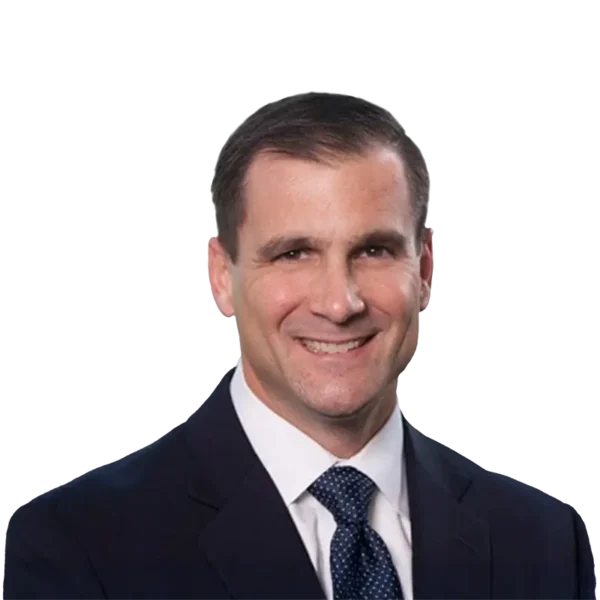
Table of Contents:
- Phillips' pivot from consumer goods to medical technology
- Why the healthcare system is "fundamentally broken"
- How virtual care moves beyond traditional telehealth
- How AI is impacting healthcare now
- Navigating new policies and leaders in the healthcare space
- Inside Phillips' deal with the DoD
- Is Philips particularly vulnerable to tariffs?
Transcript:
Inside AI’s healthcare boom
Jeff DiLullo: In the last year, I’ve had, between my wife and I, one parent die of congestive heart failure, three in long-term assisted living, two granddaughters born in the last six weeks in two different countries. I’ve had a joint replacement, and I’m about to have another one. And all of these things make it very real and tangible to me that I see the lead time for follow-ups and how long it takes to get a surgery and how hard it is to navigate the healthcare ecosystem, it’s very, very hard.
Bob Safian: That’s Jeff DiLullo, CEO of Philips North America, the former light bulb maker, now a leading health tech provider. I wanted to talk to Jeff about how technology and AI are reshaping healthcare right now in 2025. While RFK Jr. and MAHA may capture a lot of headlines, Jeff argues that streamlining and speeding up the workflow of care can have the largest impact on outcomes today, pointing to examples from the U.S. Veterans Administration, the VA, to the Roswell Cancer Institute. For anyone who might need a radiology scan or other diagnosis, speed is arguably the biggest priority. So let’s get to it. I’m Bob Safian, and this is Rapid Response.
[THEME MUSIC]
I’m Bob Safian, I’m here with Jeff DiLullo CEO of Philips North America. Jeff, thanks for being here.
DILULLO: Glad to be here.
Phillips’ pivot from consumer goods to medical technology
SAFIAN: So Philips is based in the Netherlands, operates in 75 more countries, but gets around 50% of its revenue from the U.S., so you are on the hot seat in a lot of ways. The company started as a light bulb manufacturer 130 years ago. Some people may know it for appliances or TVs with the Philips name, but those businesses have been largely sold off. Today you’re focused on medical technology. How do you describe what the company does today?
DILULLO: I’ll tell you though, it’s really hard to imagine a company that has this much pedigree with so many consumer electronics, and really about 15 years ago chose to just become a pure health tech concern. And so today what we do basically in the continuum of health is around AI-enabled solutions for diagnostic imaging. So an MRI or a CT, non-invasive cardiac procedures, and then patient-monitoring solutions from an emergency room and ICU all the way to the home.
SAFIAN: I mean, this is a long way from Philips’s legacy. Does the brand name recognition that Philips has, is it an advantage or a disadvantage? I mean, there’s still whatever light bulbs and consumer goods on store shelves labeled Philips that you have no part of, right?
DILULLO: So I think it’s an advantage in two ways. First of all, we get great royalties for allowing the licensing, but with a 134-year-old company, you want that legacy. You want that continuity to be part of your name and your brand. Of course, we’re focused on improving lives. Better care for more people is kind of our brand word now. But in the U.S. where people are not in the healthcare industry, when I talk to them, Philip, some people say, “Do you mean oil and gas?” “No, we are light bulb people.” “No, we are health tech.” But it always starts a discussion and they do recognize the name brand and I think that goes a long way for us.
Why the healthcare system is “fundamentally broken”
SAFIAN: Yeah. So you’ve called the U.S. Healthcare system fundamentally broken. We’ve heard different versions of this for a while. What do you see as broken and what role can Philips play in fixing that?
DILULLO: People in the healthcare system are amazing people. They all have a desire to serve and help other humans, but the system itself, at 17% nearly of GDP in the United States, it is in crisis and it will only get worse. And let me give you the three bigs. Number one, aging population. People are living a lot longer and they’re needing more care. Number two, people are leaving after the pandemic, particularly, we saw a precipitous drop in people that left being healthcare providers, and mental health became a major issue post pandemic. I think people recognize that. And then the third thing is cost continues to go up. And again, healthcare systems themselves and hospitals, they’re not making tons of money off of this. This is in the overall inefficiency of the system.
So it’s in crisis because we all want our long-term care and our kids’ care to be better. But the truth is it’s going to cost more, it’s going to be less available, and there’re going to be fewer people to give us that care. I have to say this because in the last year, in the last nine months, I’ve had, between my wife and I, one parent die of congestive heart failure, three in long-term assisted living, one in mental care. Two granddaughters born in the last six weeks in two different countries. I’ve had a joint replacement, and I’m about to have another one. And all of these things make it very real and tangible to me that I see the lead time for follow-ups and how long it takes to get a surgery and how hard it is to navigate the healthcare ecosystem.
It’s very, very hard. What we do at Philips is about driving productivity and better workflow for end-to-end patient care, for staff. Our primary focus has really become less about the product and more about the productivity, allowing in two big ways, and I hope we can unpack these. Number one, virtual care is hitting stride. It’s a huge opportunity for us to extend virtual care way beyond telehealth that people classically think about. And two, the rapid movement of AI with an administration embracing AI innovation that’s really churning out new levels of AI in healthcare, and a ripe environment for very inefficient healthcare system means it’s a great opportunity on the back of that crisis.
SAFIAN: I’m sorry to hear you’ve had all those things to have to navigate. That is a lot.
DILULLO: I’m not unique, but understanding how long it takes to get between appointments and get care and get follow-ups and get imaging and get diagnostics. Everything we’re doing is about making the life of my family better diagnostic care, more accurate diagnosis and faster treatment, and I want that for everybody else.
How virtual care moves beyond traditional telehealth
SAFIAN: So you identified a distinction between virtual healthcare and telehealth. Can you explain what that distinction is?
DILULLO: I think broadly speaking, I’m sure you’ve had telehealth appointments since the pandemic, adoption went way up. But virtual care for us is much more about bringing practitioners into and closer to where people live to do real diagnostic and real treatment. Let me give you an example. In the VA, our largest customer globally for Philips, we have deployed now for years what’s called “tele-critical care.” The VA’s problem was they didn’t have enough licensed nurses to be staffed correctly in ICUs all over the country. So if you’re in Montana, you’re out of luck. If you’re in Washington DC at Walter Reed, you’re probably in good shape, just supply and demand.
So that virtual care model allowed us now to look at a command center model for nurses in geographic areas, where we could lighten the load of on-the-floor nurses with the right licensure virtually with AI-enabled monitoring, audio visual monitoring, and that helped nurse burnout and nurse staffing and ultimately it was a much better patient results. But the virtual piece of this is if someone started to degrade at Fort Harrison, Montana, I could dial in somebody, a specialist or an intensivist from Walter Reed right to the bedside, look at all the vitals and all the telemetry and all the statistics and have an intervention right on the spot. And so you’re getting essentially equal care across the entire 171 or whatever VA health system. Anywhere you go for ICU in the VA, you’re going to get the same level of care. That’s game changing. That’s virtual care.
How AI is impacting healthcare now
SAFIAN: AI seems to be changing everything. There’s a lot of talk about it, but in some businesses, how do I put this? I feel like the conversation about it is ahead of the actual implementation or the impact, and I’m curious how true that might be in med tech. How is AI impacting things now, today, versus what you think it can do in the future?
DILULLO: If you remember, we released the Future of Health Index. One of the things that we realized is that AI, in some of these compartments I’m talking about, is quite mature. FDA cleared, very safe for clinical use. Other areas it’s more experimental. But the trust factor of the use of that AI is actually quite nacent. It’s the biggest barrier right now to larger scale deployment.
SAFIAN: Yeah. That health index that you mentioned, the 2025 Future Health Index, I mean, there was this sort of trust gap in it, right? That something like 60, 65% of clinicians trust AI, but only about a third of patients or certainly older patients do. How do you bridge that gap? Is it Philips’s job to bridge that gap? Whose job is it?
DILULLO: So I have the benefit of having two Gen Zs and a millennial, they are digitally fluid. They don’t worry at all about the AI models that are coming on the other side of this because they’re used to it and they understand it. Older patients not so much. The magic is always the healthcare practitioner that’s directly interfacing with the customers or the patients. If they believe what they’re doing, if they know it’s credible, if they’re using it to augment their analysis or their diagnostics, not replacing it, I think ultimately we’ll see an uplift. It’s our job to provide valid FDA-cleared, very good diagnostic capability leveraging AI. But if our doctors and nurses believe what we’re doing and they see the value in increasing their time with patients and also a little de-stressing, we think it’s going to really pick up in a parabolic way in the next few years, at least in health.
SAFIAN: I can understand and see how AI can quickly help some of the back office functionality in healthcare, but you’re talking about for practitioners, right? How does that practically work today?
DILULLO: So I’m going to give you, let’s talk radiology. It’s the biggest field right now, diagnostic, right? The earlier the diagnostic, the better the outcome most likely. And when I think of a radiologist, I have to wait a month and a half. I’m in a pretty nice part of Vanderbilt University area, like a lot of health tech around me in Nashville, but I’ve got to wait over a month to get a scan. So in radiology, we start with the box or the design, right? I have an MRI that is highly efficient. I can move it around, I can put it on a truck. But today, if I want to get it, I can get a scan in half or a third of the time because the AI that sits in the software on the system, I just got one a few months ago and it was a 20-minute scan where the guy told me a couple years ago, it was a 45-minute scan. The smart speed that we have on the system actually compresses the scanning time. It doesn’t fill in the blanks, it removes the noise.
You actually get a better scan in a shorter time. If you’re a radiologist having to do 12 or 15 studies a day, but you can do 20 studies a day, I get more patients through, I drive more reimbursement, it’s better for the hospital, it’s better for patient care. Then I take it into workflow, and today I can pinpoint things that are happening in that digital image and send it to a radiologist and say, “You should look here,” in just very simple speak. It’s very complicated stuff, but the AI is already mainstream today where we can actually pinpoint areas for radiologists to look at and make a determination. I can digitize the whole process today with digital pathology. And I can have a finding where somebody’s waiting, do I have cancer or not? I can do this in hours now because it’s all digital. And that kind of workflow and orchestration is a game changer.
SAFIAN: And the issue of AI hallucinations, which show up with some of the generative AI things, does that apply to healthcare? Are there different kinds of safeguards? Because I guess there’s a human who’s checking.
DILULLO: There’s so many things today, like smart speed I just talked about, being able to run that radiology workflow to compress the time of diagnostics, run the tumor boards in hours, on-demand meetings like you and I would on Zoom or Teams, all of that is happening today, but not happening at the pace it could. My point is, go do that right now. Every health system, go do that. As you start to unpack these more generative AI models, I think there’s real reason to be cautious and make sure we have the right controls and the governance on them, but not experimenting in them also is not an option. We kind of have to. But we see leading institutions, MGB, Stanford, Mount Sinai in New York, we see them really working with population health data to really try to train models on very specific and even broad use cases. There’s so much to do right now.
SAFIAN: In other words, you don’t have to go all the way out to the silver bullet of, we’re going to live forever or we’re going to solve every health problem. You can make the system we have right now more efficient and more effective today.
DILULLO: Bob, when you first drove a car, was the first thing you did to go to the Autobahn? Probably not. There’s so much to do in the neighborhood. There’s so much to do in my town that I can really get good at what we’re doing and drive productivity at scale. You need to have the innovation and the creativity to get us to the next place, but 80% of it we can do today. That is just game changing in terms of how we deliver today, and that’s what we think is really the next opportunity here for healthcare. And I think that’ll happen with what’s mature in AI and virtual capabilities in the next few years because the need is so great.
SAFIAN: Jeff’s focus on what’s possible right now is refreshing at a time when so many leaders are talking about their vision of an AI future that may or may not come to pass. So what’s keeping us from capitalizing on in-hand improvements in healthcare. And are tariffs and MAHA initiatives helping or hurting? We’ll get into that after the break. Stay with us.
[AD BREAK]
Before the break, Philips’ Jeff DiLullo talked about how existing tech and AI tools can radically improve healthcare right now. Now, he talks about what’s blocking that progress. If government policies help or hurt, and how health tech efforts in the U.S. military and the Veterans Administration demonstrate a model for the future. Let’s jump back in.
Navigating new policies and leaders in the healthcare space
I wanted to ask you about federal health policies that have been sort of in flux this year with the U.S. administration, with RFK Jr.’s initiatives to be so-called Make America Healthy Again, although not everyone buys into the MAHA priorities. How much of that policy activity is an opportunity for Philips or is it like a distraction or even a frustration?
DILULLO: Well, I won’t speak to the policies for MAHA specifically. I think we are very, very tuned into policies tied to the budget, to policies around healthcare delivery, Medicaid, Medicare. But we’re also thoughtful that health systems are already struggling to deal with things like tariffs and supply chain cost improvements. You’ve got all this crisis of cost and demand. And then you have these headwinds of some policy issues. We think there’s opportunities to drive massive productivity in the delivery of your care today. We work most closely in the med device industry with the FDA. I think we have a very good relationship with the FDA, and I think that some of the things that you see in the headlines are not what we’re thoughtful about. I can’t control the policy, but we can definitely partner with health systems on great technology that really helps them do their mission.
SAFIAN: When you look at your peer group in healthcare and med tech, are you seeing real leadership in the space today? How optimistic and where are you seeing changes that you feel like, “Oh, that’s moving us in good places”?
DILULLO: I do see leadership. I see leadership. I see places like Fritz Francois at NYU Langone, and I talked about what they’re doing in digital pathology. We’ve seen a big step up in governors. States have been taking a much more active role, particularly in maternal care and in-home care for people that are disabled or have comorbidities or just can’t travel. I don’t really think of it as a red or blue issue. And the last one I’ll mention when you think about access to care, Roswell Cancer Institute in Buffalo had a design point of the highest cancer rate, death rate, lung cancer death rate in the country was middle-aged Black men who were smokers, obese, and had no transportation, wouldn’t get scans. 6% of the population that was eligible for a CT lung scan got them. They actually worked with us to build a mobile CT, take it into these urban environments and park it.
We realized they didn’t quite trust it, so we started working with local faith-based organizations at churches and parked it there, and then we filled the schedule. And my point is, healthcare is always personal and local. And so us partnering with Roswell and the city and also faith-based organizations to help get the message out that we’re trying to save lives is a difference-maker. I can put an ultrasound today on an iPad and I can deploy it to a doula to go do a scan of a first trimester mother. I can send it to her home. State agencies are doing that. I can deploy that in a combat scenario. The same thing, an iPad, but I can look for a GI wound with a combat medic. So the applications are somewhat ubiquitous, but the technology is not the issue today. And that’s what we really want people to understand, is it’s about how do you embrace it and bring it into your clinical workflow to really get the most bang to reach the most people.
Inside Phillips’ deal with the DoD
SAFIAN: I heard that for yourself, that you track your own biomarkers, a watch, a ring. Yes. I mean, are you sort of into the race and the hot trend around longevity? What inspires this?
DILULLO: Just an Oura ring and a Garmin watch. And so we’ve had a multi-year longitudinal study with the Department of Defense. They wanted to look at force effectiveness and long-term degradation. So these two things spin off 163 biomarkers to a large database where the DOD is training it to look for symptoms of disease, infectious disease, potential degradation of the force. During the pandemic, we worked with them to train it so we could actually, in diagnostic evidence, identify someone who’s going to show symptoms of COVID 2.3 days before they show the symptoms. So if you’re on the Teddy Roosevelt aircraft carrier and you’re the guy or gal that gets COVID, I know before you infect and to pull you out and quarantine you and protect the force. Fun fact, my daughter who just went through special operations certification, the day she graduated and was selected for special operations, she got her Oura ring issued by the army. So I was quite happy to know that my own daughter’s part of the data set that’s helping us protect war fighters.
SAFIAN: And so this action by the DOD is in part test, but in part, it’s just being deployed broadly.
DILULLO: We’ve got, I think 13,000 active duty servicemen and women wearing it today. We’ve totaled 30, 30-plus thousand. So I’d say it’s more than a pilot. It’s run rate at this point. We would love to be able to see this be adapted beyond the DOD, which had a very specific force protection thought to it. I think for healthcare practitioners, you’re constantly interacting with potential sickness. You could actually use it to protect the force or nursing staff inside of hospitals and don’t infect your team. So there’s a lot of applications, we think, given the data that we could adapt into commercial applications. And by the way, talk about consumerization, right? It’s there. People use it every day and they’re just tracking stuff. What if we could use it for good at scale?
Is Philips particularly vulnerable to tariffs?
SAFIAN: We mentioned tariffs earlier. Your global parent, Royal Philips though, has projected a tariff hit of as much as over $300 million. Is Philips particularly vulnerable to tariffs? How do you navigate the tariff uncertainties so far this year?
DILULLO: First of all, I very much appreciate what the president’s trying to do to reestablish very clear trade balances. I don’t question that in any way. Supply chains are complicated things. There’s some materials we use for magnets that can only be sourced in some areas. We have FDA clearances for facilities that require years if we were to move facilities. So it’s not just like, “Hey, I want to move my tire manufacturing to the U.S.” It’s, “I got to get the FDA alongside and certify the processes, the people, the facilities.” So these are very long cycle problems to solve. So for us, we’re absorbing as much as we can. So are most of the people in the industry. If you looked at earnings releases last quarter, most everybody was multi-hundreds of millions of impact this year. We are, however, really working and have been since the first Trump administration to regionalize as much as we can. So we’d rather put our money there in innovation and R&D and other things that we do really well here. This is a long-term growth area for Philips, is North America.
SAFIAN: Whatever administration is in the White House doesn’t really change your strategy or your priorities.
DILULLO: No, I’m in Washington DC pretty regularly. Healthcare is not a red or blue issue. How people go about it is different. But my capability exists to deliver better care for more people regardless of their political affiliation. I mentioned a few governors. They are from both sides of the aisle politically, but they see a need with their constituency. And I love that passion and that focus and that we want to run to the fire to help those folks out. Everybody deserves a right to healthcare if we can get it to them. And there’s a lot more I think that can be done.
SAFIAN: What’s at stake for Philips right now?
DILULLO: We’re racing to be about productivity, not product. We’ll still innovate on the product, but it’s about the whole patient journey that we’re really focused and we think that’s where the winning is. We think there’s an inflection point of need, not just supply and demand and capability, but actual need. And I want to share what some of those leading systems are doing in hopes that people watch this podcast and go, “We should be doing that too.” Because it’s ultimately not about Philips, it’s about better care for more people in the United States, and abroad, and how we can deliver that in a more economic way. And it takes partnership and joint purpose to do that and going deeper to drive innovation for good.
SAFIAN: Well, Jeff, this was great. Thanks so much for doing it.
DILULLO: Oh, thanks Bob. I’m delighted to be able to spend some time with you.
SAFIAN: Jeff’s manner and his energy are so direct and logical. It’s no surprise that he’s a West Point-educated former Army Ranger. Certainly, the U.S. healthcare system could use more of the discipline that Jeff is trying to bring to bear. What’s striking is his commitment to making change right now, today, using the tools already available, not waiting for the next whiz-bang AI solutions, even as he invests in developing them. It’s an intriguing model for all of us. Why not get the most out of what’s available today? The future may be bright or dim, but the present is what’s most in our control. And when it comes to our businesses and to our health, anything that increases our control is worth leaning into. I’m Bob Safian. Thanks for listening.