Can philanthropy rescue local journalism?
When the U.S. government cut funding for local news stations, the Knight Foundation moved quickly to help stabilize a rapidly eroding industry. President and CEO Maribel Pérez Wadsworth joins Rapid Response to unpack the evolving roles of philanthropy and government, and why philanthropic organizations must learn to move at the speed of the news cycle. Wadsworth also explores what traditional journalists can learn from digital creators, the risks of crossing political leaders, and how to stay impartial in an increasingly polarized environment.
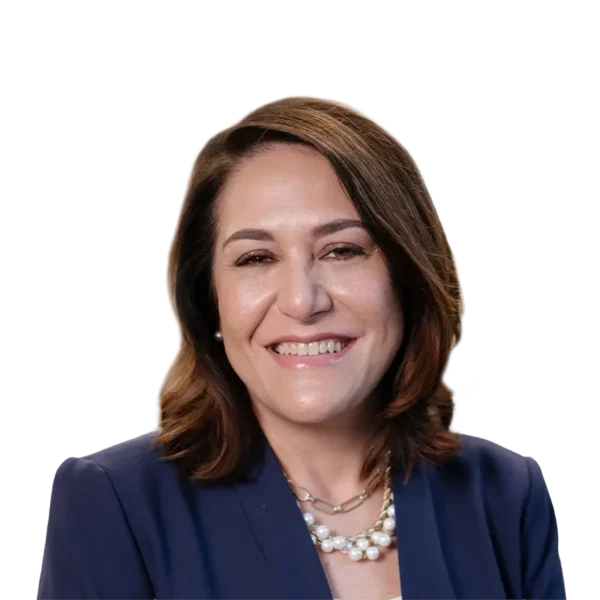
About Maribel
- President & CEO of the Knight Foundation since 2024, first woman to lead the organization.
- Former president of Gannett Media & publisher of USA Today, led 4,000+ journalists in 200+ cities.
- Oversaw Gannett newsrooms recognized with five Pulitzer Prizes during her tenure.
- Pioneered Gannett’s digital transformation, elevating its local news reach nationwide.
- Led swift philanthropic response, raising $60M+ in 11 weeks to support public media in 2025.
Table of Contents:
Transcript:
Can philanthropy rescue local journalism?
MARIBEL PÉREZ WADSWORTH: My team jokes with me that they feel like we’re moving at the speed of Formula One these days because there’s so much going on. Philanthropy, up until maybe this year, hasn’t really had any natural predators. There’s this built-in inertia, not to be confused with people not wanting to do good, but very process-laden, everything maybe takes a long time. I don’t have the patience for any of that.
BOB SAFIAN: That’s Maribel Pérez Wadsworth, CEO of the Knight Foundation. When the U.S. government cut funding for local news stations, the Knight Foundation stepped in to help fill some of the gap. I wanted to talk to Maribel about the role of philanthropy versus government, the risk of crossing political leaders, and how to stay impartial in an increasingly partisan environment. Maribel’s responses echo private whisperings I’ve been hearing from many for-profit CEOs, so let’s get to it. I’m Bob Safian, and this is Rapid Response.
[THEME MUSIC]
I’m Bob Safian. I’m here with Maribel Pérez Wadsworth, CEO of the Knight Foundation. Maribel, thanks for being here.
WADSWORTH: I’m delighted to be here with you today, Bob.
Copy LinkThe impact of federal funding cuts on local news
SAFIAN: The Knight Foundation has focused on promoting and preserving local news and journalism and local communities for decades. This year, that mission has come under unprecedented attack with big funding cuts for public media, lawsuits by President Trump against CBS News, Wall Street Journal, New York Times. Is this what you signed up for when you took on this job 18 months ago? I mean, how prepared were you, was the organization for this kind of seismic shift?
WADSWORTH: Well, no, I can tell you, it’s not what I signed up for. I don’t think anybody could have quite contemplated the things we are focused on in 2025. But that said, I’ve spent my entire career fighting for journalism and fighting for the First Amendment. So from that perspective, this is yet another part of that journey.
Is it harder right now? Absolutely. Are the fights coming across a lot of dimensions that we couldn’t have anticipated? Absolutely. But this is what the Knight Foundation was set up to do since it started its work 75 years ago. So while we’d all rather be able to pace ourselves a little bit more, I think the moment demands urgency, and it demands focus, and it demands clarity of purpose. The First Amendment is what makes all the rest of our democracy possible, so we have to defend that.
SAFIAN: When Congress stripped $500 million in funding for public media this summer, part of the critique was that publicly funded media had become partisan, that it wasn’t always impartial. I mean, is there a fair critique in there about that?
WADSWORTH: Look, I think that you’ve seen trust eroding in a lot of institutions, and as the country and the world becomes increasingly polarized and dependent on their own echo chambers for information, I think absolutely, trust is a problem, and inherent in that is a concern about bias.
The truth of the matter though is when you look at study after study, public media, particularly local public media stations, are still amongst the most trusted institutions by Americans. People believe in their local newsrooms. They trust their neighbors to report on their communities. The vast majority of these cuts did not impact, say, NPR at a national level or PBS at a national level. While the rhetoric around the cuts and the perceptions of bias centered on those entities and NPR in particular, the cuts in effect barely affected NPR, but are devastating to the local stations, especially in huge swaths of the country that are primarily rural, what today we might say are in red states, that’s who’s impacted by these cuts.
As this bill was being debated in the Senate, Alaska experienced a significant earthquake. And had it not been for one small public radio station, a lot of Alaska would not have even known that they were under tsunami warnings.
SAFIAN: And these concerns about news deserts, like apps like Facebook and Nextdoor and other ways that we’re sharing information these days, they can’t or don’t really fill that space.
WADSWORTH: No, they absolutely don’t fill that space. I mean, we’re on all these platforms. We know the kinds of information that is shared there. It is certainly not what any of us would call trusted, verified information, it’s not reliable. And let’s not forget that for a lot of the country, we still struggle with reliable broadband access. The station’s most at risk represent some 40 to 50 million Americans.
Copy LinkPreserving access to local news
SAFIAN: When these cuts went through, the Knight Foundation, alongside some other funders like the Ford Foundation, the MacArthur Foundation, you jumped in to fill some of the gap. I know you guys put in a $10 million cash injection. How did that come about?
WADSWORTH: It was a meet the moment urgently proposition. And let’s be clear that philanthropy doesn’t necessarily always move at the speed of news, but it was really important, because this was an imminent loss of funding and dollars that had already been appropriated, that these stations were counting on, in some cases for upwards of 30 to even 70% or more of their annual budgets. So very significant, very dramatic.
So we had to move quickly, and it was great to see some key partners come to the table with us. We did $10 million to help lead the Public Media Bridge Fund that is being run by the Public Media Company. And today, just 11 weeks later, we’re at almost $60 million raised. That is nearly unprecedented for philanthropy to have moved that quickly.
That said, it’s not the long-term solution. This will help to stabilize the stations that are most at risk. That doesn’t mean that there won’t be loss of programming, that doesn’t mean that every single station will survive necessarily, but hopefully, it buys the necessary time to think through the transformation of the overall system, what kinds of changes need to be made from governance of public media to some consolidations that are no doubt necessary, but we need to buy the time, because the rug got pulled out from under them.
SAFIAN: I mean, some local radio and television stations, as you mentioned, they are shuttering, they are cutting back. Is the hope that you can bring them back, or does the focus need to be on, “Hey, let’s preserve the stations that are still alive that are the stronger ones”?
WADSWORTH: Well, right now, right now, it’s a matter of truly preserving access to local news and information and community. So the prioritization around these funds will be prioritizing those stations that are, say, sole servers in their communities, that absolutely provide local news and information in addition to some of the other programming. But preservation is clearly important. The loss of these stations would represent a significant setback.
We have some, what, almost 2,000 so-called news deserts in the country today. So these stations would create that many more all over the country, but this has to be a phased approach. Right now, it’s stabilized to ensure that we preserve something to transform, and then we need to get into the serious work of what does it look like for sustainability.
SAFIAN: Yeah. I mean, sometimes I think today that the term public media, if public media is no longer supported by the government, is public media the right term or is it just media?
WADSWORTH: It’s a great question, it’s a great question. At that point, you’re right, it’s just media. And so I think that will be part of the thinking going forward.
I have to believe, and maybe it’s just the hardwired optimist in me, that we will see a rational rethinking of the federal funding picture, specifically for stations in more vulnerable areas, in smaller communities where you don’t necessarily have a huge population base to self-fund these stations or a big business community that can help underwrite the cost of these stations. But where people still understand that there is a true vital role played by these stations in their communities in terms of being connective tissue, in terms of having the issues, the people, the things that are important to the community really front and center. So my hope is that we will see some level of federal funding coming back, even if it’s more targeted to the stations that would be more dependent on public funds to continue to exist.
SAFIAN: For the Knight Foundation, obviously, you’re committed to freedom of the press and local news, but that’s part of a pledge to support local communities overall, right? I mean, it’s sort of linked together.
WADSWORTH: It is, it is. And we think it’s foundational. To us, reliable local news and information is really a central force for good in communities. People see one another, they connect with one another, they have a common fact base to rally around. And so for a community to thrive, that’s table stakes.
Copy LinkInside Americans’ relationship to the news
SAFIAN: The Knight Foundation supports a national coalition called Press Forward that supports local news. In fact, part of that initiative, you partnered with Pew Research to study Americans’ relationship to the news. And I’m curious what you learned from that, if there are things that surprised you or that were reinforced.
WADSWORTH: I think both are true. The majority of Americans today are getting their news from social media. That’s not necessarily surprising. The fact that one in five are getting their news specifically from TikTok was surprising, I think, for sure. And that is obviously more true across younger people.
It is not enough to invest in and support the supply side of news. We could put a newsroom in every city in America, we can’t, but if we could, we wouldn’t have solved the problem if we don’t understand what it is that people feel they need first and foremost. And then receiving that information, what is most relevant and resonant for them in terms of how to get that information? Because if they’re not actually connecting with the news that’s being created, then what have we accomplished? This is not a tree-fall-in-the-forest moment. We need to really understand the consumer side of the equation, and especially young people who have grown up with completely different habits and technology that continues to change so rapidly. So we really need to understand that to make sure that the news organizations out there are better equipped to connect their work, their important work, to the widest possible audience.
SAFIAN: I mean, if people are getting their news from TikTok and Instagram, and even from late night TV hosts.
Yeah, exactly.
SAFIAN: Stephen Colbert, Jimmy Kimmel, or whatever, is the role of journalism changing, is what we call journalism or what we perceive as news changing?
WADSWORTH: I think if you ask your average person, the answer is absolutely, because they are getting information in ways that you or I would not call journalism, but they are still taking that information, sharing that information, making decisions based on information that may or may not be reliable. It could very well be entertaining, it could very well be tapping into some need, whether that’s on an emotional level or what have you, but it is not what you and I would call journalism.
That said, we can’t ignore the fact that we live in a creator economy, that news influencers, and just influencers in general, forget about news, they are where it’s at. I think that news organizations, that journalists, I’ll just say, forget about organizations, that journalists have a lot they can learn from the creator space, from the influencer space about how to connect with audiences, how to more natively create content for all of these platforms in ways that resonate, in ways that are relevant.
And I think that bridging the two, because I think that in some cases, they’re well-intentioned people on the creator and influencer side who don’t necessarily – they’ve never really been educated on some of the standards and ethical considerations that the journalism side of the house has. And to me, a big win would be how do we connect these two better? How do we learn from each other? Can we elevate some of the standards, some of the ethical considerations in the consciousness of the influencer community, and can we also very humbly learn about audience engagement and audience development from that community on the journalism side? And I think both of those things together would be a huge win.
SAFIAN: I’m so intrigued by the idea that journalists and creators can learn from each other. Maribel’s optimism about what’s possible, even when she’s clearly distraught about the plight of local news, it’s impressive. So how does she turn that optimism into action, and how does she avoid being swept up into drama like the Charlie Kirk assassination? We’ll talk about that and more after the break. Stay with us.
[AD BREAK]
Before the break, we heard Knight Foundation’s Maribel Pérez Wadsworth talk about stepping in to help preserve local news outlets. Now she talks about navigating partisan pressures, the assassination of Charlie Kirk, and why DEI is still highlighted on the Knight Foundation’s website, plus what she means by philanthropy moving at the speed of news. Let’s jump back in.
Copy LinkNavigating political pressures
It’s so hard to be nonpartisan these days as a news organization. I asked the CEO of the New York Times a question about this, right? If you’re in a fight with the government over something, are you getting dragged into politics? I’m sure you worry about this too. If you support public media that the government isn’t, then are people going to look at you differently? How do you think about navigating all of that?
WADSWORTH: Yeah, look, I mean, I think I come from, call it, the old-school world in terms of what journalism ethics and standards need to be. And I’m definitely in the nonpartisan and objective camp, and I think that’s actually really important. I come from the school of the truth wherever it shall lead you. And I think we see that at our own peril from a journalistic integrity perspective.
That said, you’re right, when we step in to this challenge for public media where the federal government has not just taken a strictly, say, budgetary decision, which, of course, the government is entitled to do and should do, but have also couched it in a discussion of, say, bias, stepping into this challenge at this moment in time might potentially be seen or colored as stepping into politics. That is most definitely not what I’m doing, what Knight Foundation is doing.
Consistency matters. And what we have been consistently about is ensuring that especially local journalism is preserved and strengthened. And local public television and radio stations have been doing that job of local journalism for their communities for a long, long time. And so we are being very consistent in that, and we are not getting involved in the political debates of the day, because that’s not our place, that’s not what we do. I just think it’s important to be consistent from a values perspective.
SAFIAN: I mean, a lot of business leaders, they’re worried about being associated with anything the current administration seems to be against, that it can put the spotlight on them. I mean, has that concern impacted you at Knight? Has that concern – do you see it in other parts of the philanthropy and foundation world?
WADSWORTH: Look, I think you’ve seen a very charged rhetoric, especially in the last few months, casting funders as involved in funding things that the administration doesn’t agree with. And you’ve seen that sort of stepped-up, highly, highly politically charged rhetoric after the awful assassination of Charlie Kirk as just one example.
What I’ll say on that is simply that just like all of the other forms of expression that are constitutionally protected, and for good reason, the freedom to invest against your values is a fundamental freedom of expression issue, it’s a First Amendment issue.
And organizations like Knight Foundation, we operate across 26 cities in addition to the work we do nationally. We work with our local community foundations, with other private foundations and partners. Every one of these organizations is deeply embedded in their communities. They’re working with their civic leaders, they’re working with the business community, they’re working to really understand the needs and the desires of that local community, the things that they say that they value and they say they want and need. And so fundamentally, this is good work, it is community-driven work.
And for 75 years, the Knight Foundation has consistently been investing against these things. No matter who has been sitting in the White House or on Capitol Hill, no matter which party has been in power or not in power, we have consistently done the same things, and that’s our intention is to continue to do those same things.
Copy LinkWhy the Knight Foundation prioritizes DEI
SAFIAN: I noticed that the Knight Foundation website still highlights diversity, equity, inclusion, DEI. Not everyone does that. I mean, most places, a lot of places have taken that language down. Have you talked about that issue?
WADSWORTH: We talk a lot about all manner of issues now, you can imagine. I mean, there’s executive orders, there’s all kinds of things going on out there. But again, I come back to consistency. The words that have been on our website have been on our website for a long time, regardless, again, of who’s been in power. We’re not some monolith. We’re doing work in places like Wichita, Kansas, and Tallahassee, Florida, and Lexington, Kentucky, in addition to Detroit and Philadelphia and Miami, the people we’re here to serve are as representative of this nation as anything you could hold up.
And so when we think about diversity and inclusion, we really mean that, we really lean into serving very diverse communities all across this nation, doing that inclusively, doing that in a community-informed way. We’re not here to impose our view of things; we’re here to support the people and the local institutions that are really the ones getting the work done in their communities.
SAFIAN: Those terms like the DEI backlash that is so prominent in national politics, when you’re at a local level and you’re interacting with the communities that you’re working with, it’s not an issue in the same way.
WADSWORTH: It’s not an issue, it’s not an issue. It’s not about what somebody looks like, it’s not about where they come from. Their center of gravity is they care about that city, they care about their place, they want their place to be better. They’re working for a common purpose. They might not all agree on all the things. Certainly, I’m sure there are differences politically and otherwise, but at the end of the day, it’s love of community that’s bringing people together.
I want to lean into that energy. I think there’s a lot more of that in this country than there is the rest of it. This rhetoric at the national level and everything’s polarized and we can’t agree with each other and increasingly just negativity and frustrations and vilification of people. When you spend time in our cities, you get a real respite from that.
SAFIAN: National news sources seem to lean into that divisiveness a little bit more. And maybe the local news that you want to support is a little more clear-eyed about it, open?
WADSWORTH: Well, I think it’s just more authentic to the place, because they’re there, this is their hometown too.
Before coming to Knight Foundation, I spent most of my career at Gannett Media. And Gannett Media, yes, publishes USA Today, but more importantly, and the bigger part of that company is 200 newsrooms in cities of all makes and sizes all across the country. Spending time in those cities, being across the table at a chamber of commerce breakfast, or raising my family in one of these communities, and my kids being in school with my fellow residents or our church community or what have you.
And I remember always the moments where there would be, say, a big story that always starts in a local community and becomes a national story, and the national media inevitably descends on that city. And we used to joke in those moments that here they are parachuting in and they’re having to tap into those local newsrooms for sources just to better understand. And it’s not the same. When you are living and breathing and being part of those communities, there’s a level of authenticity, there’s a level of local knowledge, of understanding even the language you speak in a community that is very hard to understand if you’re just popping in on occasion because of a news event. And that’s what I’m working so hard to preserve, because we still see survey after survey that shows that there’s eroding trust in media. Once you ask the question about local, it really changes.
Copy LinkWhy philanthropy needs to move faster
SAFIAN: You used the expression earlier, moving at the speed of news. You said that philanthropy needs to move at the speed of news. What does that mean?
WADSWORTH: Well, I’ll tell you, my team jokes with me that they feel like we’re moving at the speed of Formula One these days because there’s so much going on. Philanthropy, up until maybe this year, hasn’t really had any natural predators. There’s this built-in inertia, not to be confused with people not wanting to do good, but very process-laden, everything maybe takes a long time. I spent the first four or five months of my tenure out meeting partners and in communities, and you get a pretty clear picture very quickly of folks having to wait a long time to get responses sometimes, and they feel like they have to jump through a lot of hoops. I don’t have the patience for any of that.
And we have to adapt. And if that means we have to adapt our processes, if that means we have to change some things about how we work, then we do that.
SAFIAN: Well, Maribel, this has been great. Thank you so much for chatting with me.
WADSWORTH: Thank you so much for having me, Bob. It’s been great.
SAFIAN: Maribel stresses that she doesn’t have patience, but at the same time, the Knight Foundation’s mission is all about patience: patient change, patient impact. It’s an important reminder, especially in this era of tumult and disruption, that our sense of urgency, which is absolutely required, can override our sense of purpose. Our big-picture priorities, whatever the pressure, need to guide our near-term actions. I’m Bob Safian. Thanks for listening.
Episode Takeaways
- Maribel Pérez Wadsworth, CEO of the Knight Foundation, reflects on the rapid and urgent challenges facing philanthropy today, especially as local news faces major funding cuts and heightened political pressures.
- She emphasizes the vital role local news plays in community resilience, sharing how the Knight Foundation led a swift philanthropic effort, raising nearly $60 million to stabilize at-risk public media stations following federal funding cuts.
- Wadsworth highlights that short-term funding is a stopgap, not a permanent solution, and underscores the need to rethink the sustainability.
- She discusses the rise of social media platforms as primary news sources, noting that journalists and creators can learn from each other.