Chomps co-founders Rashid Ali and Pete Maldonado had an unusual side hustle: selling meat sticks online. The co-founders join host Jeff Berman to reveal the phone call from Trader Joe’s that changed everything, how they used lessons from failed startups, and how they built Chomps into a snack empire.
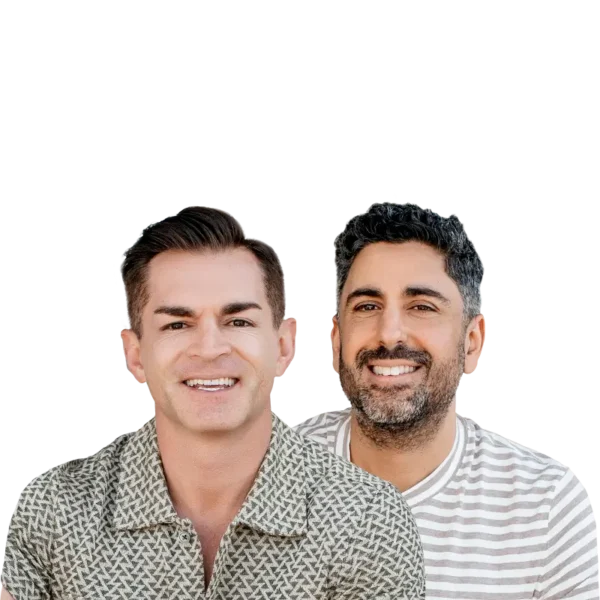
About Pete
- Co-founded Chomps, reaching ~$1B in retail sales in 2025.
- Pioneered a D2C-first snack brand adopted by Trader Joe's as rare branded item.
- Scaled Chomps profitably with minimal outside capital until PE partnership in 2021.
- Built and led a high-growth CPG team through major pivots and market challenges.
- Guided Chomps' successful national expansion and major brand repositioning.
About Rashid
- Co-founded and serves as CEO of Chomps, a leading protein snack brand
- Scaled Chomps to nearly $1B in retail sales in 2025
- Led distribution expansion into 30,000+ retailers nationwide
- Achieved rare branded product status at Trader Joe's
- Built Chomps with minimal outside capital, prioritizing profitability
Table of Contents:
- Inside Pete Maldonado's first failed start-up
- The origin story of Chomps
- Choosing gradual growth over rapid expansion
- The Trader Joe's breakthrough
- The case for taking on debt over giving equity
- Why Chomps singularly focused on Trade Joe's
- Expanding to new distribution channels
- Lessons from building the Chomps brand
- Market challenges around COVID
- How the founders of Chomps navigated private equity
- What's next for Chomps
- Advice for other CPG founders
Transcript:
How to sell a billion dollars of snacks
RASHID ALI: My dad always kind of gave me a hard time saying, “You’re the only son that doesn’t have a Master’s degree,” which I never saw a point to getting an MBA, and so this to me was like a living case study. Like let’s do this, let’s see if I can get it off the ground.
JEFF BERMAN: That business Rashid Ali wanted to use as a living case study: Chomps, the wildly popular meat sticks that live in my and countless other travelers’ snack bags. It’s safe to say the company has paid off more than an MBA for Rashid at this point. He’ll sell about a billion dollars of Chomps just this year, but it hasn’t always been that easy.
ALI: It was a bad situation, but we could always see on the other side. Pete and I do our best work when stress is high, when our back’s against the wall. We both kind of have a bit of a chip on our shoulder where if you want to see us work really hard, tell us something’s not possible.
[THEME MUSIC]
BERMAN: I’m Jeff Berman, your host. This week on the show, the co-founders of Chomps, Rashid Ali and Pete Maldonado. They’ll share lessons from failed start-ups that shaped Chomps, how a phone call from Trader Joe’s changed everything, and advice for co-founders about making a partnership work even in tough times. Rashid, Pete, welcome to Masters of Scale.
ALI: Thanks for having us.
PETE MALDONADO: Good morning, thanks for having us.
BERMAN: It’s good to have you guys. So I was saying as we were about to start rolling, I have a hundred percent net promoter score of your product, so super excited to talk to you guys. I understand you guys have quite a founder meet cute. How did you guys get to know each other?
ALI: Pete and I met through mutual friends. It was a poker game, we were all playing cards, and he had mentioned that he had started a company to compete with Omaha Steaks to offer grass-fed, grass-finished, like a healthier version. And it was just interesting. I always felt that people would eat healthier if it was convenient, and what he was doing was effectively offering a convenient option, and then the next day I texted him and said, “Hey, would you ever want some help?” I talked about my background in ops and finance, and we met at that diner in the South Loop, and my wife was an attorney at the time, so she drafted a partnership agreement, and that’s ultimately how it started.
BERMAN: You guys went from poker game, to hanging in a diner, to let’s do this?
ALI: The speed, I would put it on Pete. He runs pretty quickly, I’m a little bit more thoughtful, but I think he kind of pulled me forward, and it was awesome the way it worked out.
Copy LinkInside Pete Maldonado’s first failed start-up
BERMAN: Pete, this was not your first foray into consumer products, is that right?
MALDONADO: No, I had a frozen food company in my early twenties, it’s called Frozen Fitness. Entire meals, so we were selling them out of glass top ice cream freezers, and then the goal from there was to start selling online, and that’s kind when it all fell apart.
BERMAN: What happened? Why did it fall apart?
MALDONADO: Well, for one, kind of going too big too fast, but then also raising money from the wrong person I think was probably one of the bigger mistakes that we made, which kind of influenced the way that we built Chomps. Going forward, we wanted to make sure we could do this all on our own, grow a self-sufficient business that wasn’t relying on outside capital.
BERMAN: What does it mean to have raised money from the wrong person, what happened there?
MALDONADO: He really had unrealistic expectations, let’s put it that way. He thought he was going to cut a check and get a quick return, which is not how it works, I think anybody knows that.
BERMAN: Definitely not if you’re in venture, right.
MALDONADO: He was supposed to give about $250,000 to buy into the company, gave me about $80,000. $60,000 of that went into frozen meals, so it was in inventory, and then the rest of it was to be for marketing, building a website, and all of that. I spent the money, I was ready to go, I needed to get another check now because really to get to a launch, and he cut me off. So he said, “No, I need that money back.” Because this was actually when the real estate market was melting down.
BERMAN: Late 2000s.
MALDONADO: Late 2000s, yeah, it was like 2008, 2009. And so we were right in the epicenter of it all. Naples, Florida got rocked, and so he decided he wanted his money back, and I’m like, “That’s not possible, it’s in inventory.” I ended up actually just handing the company over to him and his attorney, and I decided I was moving to Chicago with my wife, and I was going to start over.
BERMAN: And for a lot of people, that would be a turnoff to pursue an entrepreneurial life. Why did you decide to start another company?
MALDONADO: I can never imagine myself having a real job and a boss and all that. I’ve never had a real job in my life, not a corporate job.
Copy LinkThe origin story of Chomps
BERMAN: So where did the idea for Chomps come from?
MALDONADO: I was a personal trainer throughout college. I’d spent a lot of time making these elaborate meal plans and grocery lists and trying to get them to stick with it, and it just never worked. Back then I think the options for good quality protein and easy meals were just few and far between, they didn’t really exist at the time, so it kind of influenced all of my CPG ideas going forward, and Chomps was actually one of them. I grew up eating more Slim Jim’s than I’d ever like to admit nowadays, but I liked meat snacks in general, but I liked the sticks better because I could chew, my jaw wouldn’t kill me after, and I feel like I would eat a bag of jerky and get a headache.
So that’s kind of where the idea came from, like why is there not a better free version? Any meat product is going to have a USDA legend printed right on it, and so we went to every C-store, anywhere we could find meat sticks, bought all of them and found every single USDA legends we could find, looked up every one of those plants and called them, and then we’ve stumbled on Kevin Western from Western Smokehouse, which is our first co-packer, but now we have, what is it, four plants now with them, and we’re doing the big JV in Mexico, Missouri on a pretty massive plant, a 300,000 square foot facility.
BERMAN: Rashid, where was the business when you all sat at the diner and started talking about this?
ALI: So at that point, it was really just like a website, and it was the frozen steak business. So when we were doing the steaks, the co-packer we worked with also made a refrigerated multi-pack snack stick pack, so effectively we were selling steak and ground trim, but there’s still excess trim, and so he was like, “Well, why don’t I make it into a snack stick?” We wanted to build a profitable business, and we didn’t want to have to raise money, and we also wanted to present a more convenient option to our consumers. We did all the legwork, and we found this co-packer that was able to work with us on a sugar-free, grass-fed version of what we wanted to bring to the market.
BERMAN: I want to just dial in on this diner conversation because your background, Rashid, is more corporate consulting. This is a start-up, this is a person you don’t know particularly well yet, what was it that made you say, “I want to jump into this with you and do this?”
ALI: It’s interesting. So Pete and I both come from immigrant families, we were both born here but my dad was always an entrepreneur and he just always had his hands in these things. So I saw that, and I think kind of in the back of my mind there was always this desire. And while I was consulting, the firm I was at, it was an eat-what-you-kill shop where I had a good salary, but my bonus was tied directly to billables if I sold work, and so it had a very entrepreneurial spirit, so it was there.
But the honest reason that kind of got me excited is I went to a public school, I got a whatever degree, but my brothers, amazing private schools, they all had Master’s degrees or doctorates, and my dad always kind of gave me a hard time saying, “You’re the only son that doesn’t have a Master’s degree.” He’s like, “I just say you all have Master’s. It’s easier.” Almost downplaying it.
So for me, I studied business in college, I never saw a point to get an MBA, and so this to me was like a living case study, let’s do this. Let’s see if I can get it off the ground, and it’s not like I had extra time, my full-time role was quite demanding, I traveled a hundred percent of the time.
BERMAN: You didn’t give up your day job when you started doing this?
ALI: No, we did both for quite some time, me longer than Pete, but it truly was a side hustle. We purposely designed the company to be D2C, to be e-commerce so we could support it on night and weekends, that was the original premise, but the company took a life of its own, grew a lot faster than what we could have expected, and at some point we had to lean in and pivot.
Copy LinkChoosing gradual growth over rapid expansion
BERMAN: How did you build a plan that let you scale efficiently and make sure that you could do this without overexposing yourself and without needing to take on outside capital?
ALI: When we built the model, we were able to find little working capital gains that allowed us to do it. I mean if we were in the early days to 10x the business, no, we would’ve definitely required more cash to be able to fund the inventory, but we did it gradual growth like doubled or tripled year over year, and it allowed us to build it.
BERMAN: What I’m hearing is that you were willing to throttle the growth potential to control your own destiny, to not be in a position where you had to take on the outside capital and expose yourself?
ALI: And I think it was actually smart because in the early days people get so excited, and they just want to go all out. They have a huge opportunity to go national with a partner, but it’s like you haven’t tested the product, you haven’t pressured your infrastructure to see if you can scale. In retrospect, it was the exact right thing to do to grow gradually as we were trying to figure out who we actually are.
MALDONADO: But that’s also why we’re so successful in retail, is all of that foundation that we laid in the D2C world, building that community, building a loyal following brick by brick, one person at a time, one email list at a time, and that’s why when we came out of the gate at Trader Joe’s, our velocities were insane and they still are insane.
Copy LinkThe Trader Joe’s breakthrough
BERMAN: You reference Trader Joe’s, which was your first retail partner. When did that deal happen, how far into the company were you and how did that change the company for you guys?
MALDONADO: Yeah, so I was walking my dog, early 2016, and I get a phone call on my cell phone from some random number, and it’s a very high up person at Trader Joe’s and introduced herself and said, “We want to put Chomps in the store.”
BERMAN: This is a cold call from one of the largest grocery chains in America? Just saying, “We want your product?”
MALDONADO: And that would be my favorite store in the world, and I was like, “Yeah, no, this is totally, I’m not getting punked here.” And I thought it was a prank for sure. So the first initial questions were like, “Could you support this type of volume?” And, “Do you have the funding to do this?” And I’m just like, “Of course we do, we’ve got this.”
And the other thing was they wanted to discuss private label, but for us it was me and Rashid, neither of us were full-time at the time. I was still doing some real estate deals to pay bills, and he was flying around the world, and so it was like we could barely support what we’re doing, one single brand. If you do a private label, you’re essentially running a second brand. So I said, “We just don’t have the bandwidth to do that.” So I said, “No, we could do it as a Chomps branded item.” Back and forth, a few phone calls like that, and then she decided she wanted to put us in and give us a shot.
They were specifically looking for Whole30 approved items at the time. They put us in, I think it was RXBAR, there were a couple other ones. Their buyers and their category managers were so in tune of what’s trending before the trend actually happens. We always thought we had the ability to grow into something big, but they saw it even before we did, I think.
BERMAN: How big was that in this order?
MALDONADO: 1.1 million sticks, I believe. It was big.
BERMAN: And they don’t pay in advance for that, right?
MALDONADO: No, they don’t. They have great terms though, they pay net three half the time, they’re good to work with in that way. But yeah, we needed the upfront capital to produce. Now we know now Trader Joe’s is really the unicorn retailer where the way they operate is quite unique.
BERMAN: Can you say more about that?
ALI: 90% plus of the items are private label, so they’re Trader Joe’s branded products. So for you to actually get a branded product within Trader Joe’s, it’s extremely rare.
MALDONADO: They say, “Give us the product for your best price, and we deal with the rest.” They won’t even let you, you can’t go in there, in the store and go merchandize, it’s all on them. And so that for us, it was great because one, we didn’t have a team, it was the two of us, and two, we had no idea what the hell we were doing. We just were able to focus on creating a great product, a quality product, and deliver it to them, and then they took it from there. That doesn’t happen at any other retailer that you work with, so we were incredibly blessed and fortunate to have that as our very first retailer to work with.
BERMAN: From a revenue perspective, how big were you when the Trader Joe’s deal came in?
ALI: Yeah, so I think we had finished the prior year at about 400, and I think after we got the Trader Joe’s order, we did about 4 million that year.
BERMAN: Wow.
ALI: Yeah.
MALDONADO: Incredibly back loaded by the way, but the bulk of that was between August 8th and the end of the year.
BERMAN: So you’re talking about 10x growth in a few month period here, and it’s still just the two of you guys. How do you manage that?
ALI: When the purchase orders came in, I remember I’m at home, my family was in town, we’re playing spades, and Trader Joe’s would fax the POs, and so we would get a text or email of the fax. And so it was 1, 2, 3, I think there were seven for each of their DCs, and I’m doing math in my head and I’m like, I told my family, I was like, “I got to go pull up my Excel,” and I call Pete, I’m like, “Dude, this is 1.1 million sticks.” And he’s so excited. “We’ll figure it out.” For me I’m like, “Well, this is not what we discussed.” I had to do the math to say, what would it cost us to even fund this order? And it was just over a million. This was a Thursday, Friday. Over the weekend we had to figure out, how are we going to raise a million to fund this order?
BERMAN: Where does it come from?
Copy LinkThe case for taking on debt over giving equity
ALI: We did friends and family, we did debt only, and we were able to find the right folks that would trust us. We were transparent too because we were like, “Look, this is backed by a purchase order,” but at the end of the day I’m like, “We’ve all cooked steaks, we’ve all screwed something up, and we’re going to do this at significant scale, but we can tell you that we’re going to do everything we can to make sure that we can operate as well as possible and avoid any issues, but to be fully transparent, there’s risk here.” So in exchange for the risk, we gave a really healthy interest rate. My brother was one of the individuals that came in, and he made me do a personal guarantee.
BERMAN: I mean understandably and no equity, this is all debt? Why not do equity? You’re taking on risk, bringing that debt on, you’re giving a personal guarantee to a family member, why not sell equity?
ALI: Doing what we were doing was already stressful enough and if we can find a way to not take on equity, why do we need to? Again, I always thought of this as, it was me and Pete were doing this, we were going to figure this out, and you want to hold off as long as possible, then you just get a better valuation down the road.
BERMAN: Still ahead, how Chomps totally overhauled its brand strategy when it realized something surprising about its customers.
[AD BREAK]
Welcome back to Masters of Scale. You can find this conversation and more on our YouTube channel.
Copy LinkWhy Chomps singularly focused on Trade Joe’s
What happens when you go into Trader Joe’s?
MALDONADO: I would love to be in the store like demoing and stuff, I guess what we want to do, but they don’t let you do any of that stuff, so it’s literally just like you send it in and pray. That’s literally what happened.
BERMAN: If it were me, I’d be at Trader Joe’s though walking the aisles being, “Oh, look at this product.”
MALDONADO: We were checking it out. I was staying in touch with the buyer, it was like two days in, and she’s like, these numbers are really strong. I was like, okay. But then she says, “You guys are on these end caps where they do new item end caps,” and she’s like, “This happens all the time, and you’ll see a big pop, and then it bottoms off.” I’m like, okay.
And then five days later I keep touching base. I’m like, is this still going, still going? So five days later she’s like, the numbers are growing. It should have been dying down by now because you’re coming off of these end caps, actually, we’re going to run out of inventory really soon.
That first PO they gave to us, they gave us 17 weeks of lead time to deliver it because we needed it. We were bringing in beef from Tasmania and all this stuff, it was a long lead time. So anyway, she goes, “I need to get POs in now because you’re going to go out of stock.” This was supposed to last us five months, and it’s going to be gone in five weeks.
BERMAN: Wow. This is from a sophisticated retailer. They’ve got a lot of data, they should have a pretty good idea of how a product’s going to perform. That’s an incredible five months to five weeks, you’re flying off shelves, flying.
MALDONADO: So let’s put it into perspective. So a good retailer like a health food store, a Whole Foods, whoever, might do like 15, 20, 30 units per store per week. We came out of the gates doing 360 units per store per week of this product, that’s massive. Like one stick at a time, not selling multi-packs, it’s single sticks. And so that never slowed down, and it still hasn’t slowed down actually, we continued selling at that rate. That was a single skew doing those types of numbers, unheard of, and so a great relationship starter for us, we’re still working with them today.
BERMAN: So is this a moment where you say, “We really ought to quit our day jobs and do this full time, we ought to be pitching other retailers, we should be building teams out.” What does this do for you guys leading the company?
ALI: Part of in the back of our minds we’re saying, okay, we’ve just launched in this retailer, we have to figure out: does it have staying power? There’s so many people in our ears saying, “It’s Trader Joe’s, they’re going to private label you, there’s no longevity.” But we believe strongly that our performance will lead to staying power. Pete, thankfully, went full-time to be able to really man this. I still was like, let’s wait and see this through. And so he went full-time in 2016, I didn’t go full-time until 2018, and in 2018 is when we opened an office, and we hired our first employee. But that two years when some brands may have said, “Okay, we have a window to grow into retail,” we were going to be the best Trader Joe’s partner possible.
BERMAN: What did that mean?
ALI: That meant that was our only retailer. We focused on e-commerce, we focused on scaling, we focused on branding and packaging and who our consumer was.
Copy LinkExpanding to new distribution channels
BERMAN: At the end of this two year stretch where Pete, you’re now full-time with the business, you are relentlessly focused on quality and on super serving Trader Joe’s, being the best vendor they could possibly ever dream of having, what flips, what gets to the point where you go, “We need to start hiring and going into other retailers,” and what’s the inflection there?
ALI: At the end of the day, concentration risk is real, and we knew we needed to continue to grow. There were still growth opportunities at Trader Joe’s, but I think we started to learn who our consumer was and we knew that next channel we needed to go after was the natural channel.
So in the ‘natural’ channel, there’s two major distributors and you have to be in those distributors to be able to service the Whole Foods or Sprouts or Fresh Market. And so that kind of started our natural journey and again, Pete and I still just had to figure it out, because again, Trader Joe’s is clean, single truckloads in, and so it’s almost a blessing and a curse that because we thought retail was going to be that easy. We didn’t really even understand what trade spend meant, and so we had a crash course, and we were able to figure it out pretty quickly.
Copy LinkLessons from building the Chomps brand
BERMAN: What did you learn about the customer?
ALI: Well, I think we realized most of our customers were female. So if you think about the legacy brands within jerky, it’s very masculine, right? It’s serving a male demographic.
BERMAN: I mean Randy “Macho Man” Savage, right? I mean one of the great spokespeople for the category?
ALI: Our consumer, we call it the “Healthy Achiever” — it’s someone who’s health conscious, and so no one was speaking to that consumer. And so if you look at the original Chomps branding, the Chomps logo used to be like a cow brand, it kind of mimicked what all the other brands were, but we realized, no, no, we got to lean into this. We didn’t want a feminine product, we wanted a product that was fun, approachable, and so we worked with an amazing creative director at the time, and she helped bring this brand to life, and there’s a little nuance in there. Even if you open up a Chomps stick, we have what’s called a “Chompspiration” where it’s almost like a fortune cookies’ motivational comment. So it’s like little things within the packaging that throughout 2018 we worked on the ideation, I think late 2018, 2019 is when it kind of came to the shelf.
BERMAN: Retailers are notoriously stingy with data. Where were you getting this insight that your customer was disproportionately female?
MALDONADO: That was the first time that we had the money to actually do real panel data. So we did attitude and usage studies, so it was pretty eye-opening for us, and we realized that we weren’t even speaking to our core customer with the messaging and with the branding and all these things, and so we realized, man, we need to reposition everything about us, and that really resonated, it was a major unlock for us.
BERMAN: You raised money eventually. What led you to raise the capital?
MALDONADO: So we actually had, it was, I guess you would call them advisors or whatever they would be, there were small investors. We took money from them, not because we needed money, it was supposed to be like a formality, skin in the game here, so that was early, it was 2017 type thing.
BERMAN: How much did you raise from those folks?
MALDONADO: A total of less than $700,000 over the course of the two-year period that we were working with them.
BERMAN: So relative to the scale that we’re talking about here, it’s not a lot of money.
MALDONADO: We were already $10 and $20 million, so we worked with them from 2017 and 2018 or something like that, but yeah, it was more for skin in the game. So even to this day, that’s all the primary capital ever taken, even aside from a private equity raise at the end of 2021. That was a little bit different, and we still didn’t need the money, it was more the company needed the money, we wanted people that have been there and done that. We realized this thing was getting very big, and we realized there were so many opportunities, but the risks were getting greater and greater, and we just came through COVID, and that was a scary one for us, we learned a lot, but we also realized that we weren’t bulletproof, and so we wanted to just have a good financial partners to back us.
Copy LinkMarket challenges around COVID
BERMAN: As you are white-knuckling your way through this COVID moment, was there a moment where you pulled the team together and had the hard conversation about here’s where the business is, here’s what we’re facing, necessity is the mother of invention, and we are in a moment of need, and then insights came out of that?
ALI: I would say Pete and I are, maybe we err on the side of complete transparency. There was no hiding anything. There wasn’t like Pete and I behind closed doors being like, “We are screwed.” No, we believe strongly, we want to get everybody’s perspective. Let’s think about this collectively and figure out what the right path forward is, and we’re all in this together, we need to figure it out.
So no, we were completely transparent, and it was a bad situation, but we could always see on the other side of it. You always had to have that optimism that we were going to get through it, and it’s really shitty and it’s challenging, but also there’s some joy in that too. I feel like Pete and I do our best work when stress is high, when our back’s against the wall. We both kind of have a bit of a chip on our shoulder where if you want to see us work really hard, tell us something’s not possible.
Copy LinkHow the founders of Chomps navigated private equity
BERMAN: Pete, having been burned once before raising capital, when you guys decided to raise the money, what did you do to get comfortable that you were taking money from the right partner, getting into business with someone you could really trust and be aligned with going forward?
MALDONADO: It was more of us interviewing them than it was them interviewing us, we put them I think through the wringer. But what actually turned out we really liked our current partner, Stride Consumer Partners because of the way that they were kind of returning that hyper diligence, and so we realized they’re not going to go make a bad decision and partner with us and we’re doing the same.
And for us it was like the check part of it, the actual money was, that was kind of table stakes to be negotiating with us. Again, the company was profitable, already was doing great, didn’t need the money, and this was more of just for us and the families. But yeah, we asked a lot of questions, we wanted to meet everybody, and so it was a lot of in-person on site. The biggest thing you could do with a private equity partner is meeting the operating partners that are going to be the ones that are supposed to be helping drive value, and so that was one of the things that we loved. We still love their operating partners, they’ve added so much value since we’ve partnered with them.
ALI: The other thing is, I guess anyone going through the process, talking to the teams, spending time with the team, but also talking to their investments, talking to the portfolio companies that they worked with and not just the ones that they give you as a reference, networking with the other ones too.
And I think one of the eye-opening discussions is, we were able to find one of their investments that didn’t go so well, and we talked to the founder and CEO who effectively got pushed out, and the individual that we work with, the lead partner, he mentioned his name. He’s like, “If JM calls me for a deal, I would invest in him.” He’s like, “The challenge I had was, there was another individual, but also he’s like, I understood what they were doing. I get it. It was a bad situation, but I got it.” But the character, the ability to think through things, that came from an unsolicited reference from someone who shouldn’t have necessarily been so positive, so it was those little things that got us a really good comfort level where it’s like, yeah, I know these guys would be a good partner.
MALDONADO: Building on what he was saying there, you sit with these private equity guys, and every single one of them goes through their list of wins. It’s win after win after win, and you’re just kind of like, “This is boring, man.” I want to hear about when things went bad, what happened. That was how they approached it. Actually, you could just tell those guys are good operators because they come in, it’s never a pretty thing, this is the start-up world, and this is tough. And so they started talking about some of the things where they went wrong. They’re like, “Okay, this was happening at this company, Mike had to go quit his day job, basically go jump in as an interim CEO at that place, and he rolls his sleeves up, got it over the hump.” And that’s what you want to hear because anybody could be a good partner when things are going great, I want to know what’s going to happen when things are going bad. I’ve been through it where I had a bad partner, and I could not work, you cannot be successful in that environment.
Copy LinkWhat’s next for Chomps
BERMAN: Where is the business today, how big are you guys, and what’s next for the company?
ALI: Yeah, so we’ll do just about a billion in retail sales this year, and that’s nearly doubling from last year. There’s a lot of white space, there’s a lot of opportunity. If you think about the jerky category, nearly half of it is in what they say, C-store, like convenience, right? Small format, travel, gas station, and so that’s all white space for us.
MALDONADO: The other thing is household penetration. There’s just a lot of households that are left, and the white space is enormous. I love it. We kind of laugh about it now because we love it when you meet somebody and we’re like, “Yeah, we’re co-founders of Chomps,” and they’re just like, “Well, I never heard of it.” And I’m like, “Awesome.” That’s humbling, I like it. It’s still a ton of work to do.
ALI: That happens more often than you’d imagine.
BERMAN: Has the recent focus on protein and diet been a boom for the business as well? Has that driven growth over the last year especially?
ALI: Oh yeah, tons of momentum. It’s interesting, last year we commissioned a study, because we wanted to understand overall snacking and what we understood is snacking as a whole is a $126 billion category. Within that—
BERMAN: In the U.S. alone?
ALI: Yeah, in the U.S., yeah, in the U.S.. Within that, protein snacking is growing three times faster than any other subcategory. And so we’re like, okay, so there is this big momentum and it is being driven by the GLP-1s, obviously building that momentum because we call it conscious calories. You have to be more cautious about the calories you’re consuming, because if you’re not consuming the right thing, you’re going to lose lean mass versus the fat. The folks that are on it and the doctors that are prescribing it, they’re letting folks know you need to eat the right thing, so Chomps has really benefited from that.
Copy LinkAdvice for other CPG founders
BERMAN: Yeah, there is an entrepreneur who is listening to or watching this conversation right now who’s in their first few months of launching a CPG business. I’m sure that they’ve gotten a lot from this conversation. What’s one piece of advice each of you has for that entrepreneur as they go off into their day and try to build to the scale that you guys have reached?
MALDONADO: One, just get started, that’s the hardest part. Nothing’s going to be perfect when you try to get your little baby out there before you’re bringing it to market. I remember I learned that the hard way. You can always iterate, you can always fix it and improve over time. That’s the first thing. Second thing is obsess over the details, period. You should know your business inside and out, and if you don’t, you’re not going to succeed.
ALI: Yeah. Since Pete gave two, I’ll give two as well. I’ll say listen to everybody but know that what they accomplished doesn’t necessarily mean that what you’re going to do is replicated. I think in the early days, a brand that we may respect a lot, they would use this agency or this partner do this, and we would think, “Well, if we use it, we could replicate their success.” But no, every case is different. And so you want to get a lot of feedback, but then you have to look at it through your brand’s lens. And I think that’s what we’re doing now is we think of everything through the Chomps lens, but we’ll figure out what everybody’s doing and be aware not only of competition, but other categories. So it’s important to look at it through your brand’s lens.
And then the other piece is you have to understand your unit economics, you have to understand that. And there’s this fallacy in that economies of scale will lead to an improved gross margin, and it just doesn’t happen. At the end of the day, our whole thing was like, wait as long as you can before you have to take outside money because you want to maximize your enterprise value. So really understanding your unit economics will allow you to build the business the right way. And in some cases, you are going to need outside capital. Some companies require it, we were fortunate to find a way to defer it as long as possible, but yeah, you got to understand those economics.
BERMAN: We’ve been in conversation with a lot of co-founders on Masters of Scale, I’m really struck by the energy between you two, the dynamic that you have. What’s one reason this works so well?
ALI: It’s interesting as you spend time with Pete and I, we’re very different. We approach the world and business in two different ways, but I think from a partnership, it’s actually the best thing because when I’m thinking about something one way, he’s kind of thinking a little bit differently. So it allows us to really see the whole picture. It creates a lot of tension, because you think about things differently, and we’re also super competitive, but I think at the end of the day, we share the same core values, we share the same passion for Chomps winning, very similar family dynamics.
And so all those things are the same, which are important, but then when we look at the world just a little bit differently. So I think that was a really great testament to the partnership we developed. We have a lot of leadership coaches that we joke around saying it’s like marriage counseling that we’ve used over the years to help root out some of this spirited discussions, but I think that’s probably a testament to some of our success.
MALDONADO: And we try to instill this in the team too. It’s like you operate with no ego, we’re always trying to learn, we’re always trying to have that self-awareness as well. We have mutual respect for each other, but we also understand what we’re good at and what we’re not, and we realized that we compliment each other. And it wasn’t always like that. Like he said, we had to do the marriage counseling first, but once we figured that out and we figured out how to work together, it was just kind of super charged.
BERMAN: That’s amazing. Rashid, Pete, thank you for being on Masters of Scale.
MALDONADO: Thank you for having us.
ALI: This was awesome.
BERMAN: Rashid and Pete’s story is an exceptional example of the power of focus. Instead of chasing every trend or spreading themselves too thin, they started off slow and steady with a dedication to quality ingredients and serving the customer that led to an incredibly strong foundation on which to build. In our protein-obsessed moment, I have no doubt that Rashid and Pete will continue to hyper scale Chomps, and I really do hope they will make a breakfast stick. Free idea, guys, just saying, I’m Jeff Berman, thank you for listening.